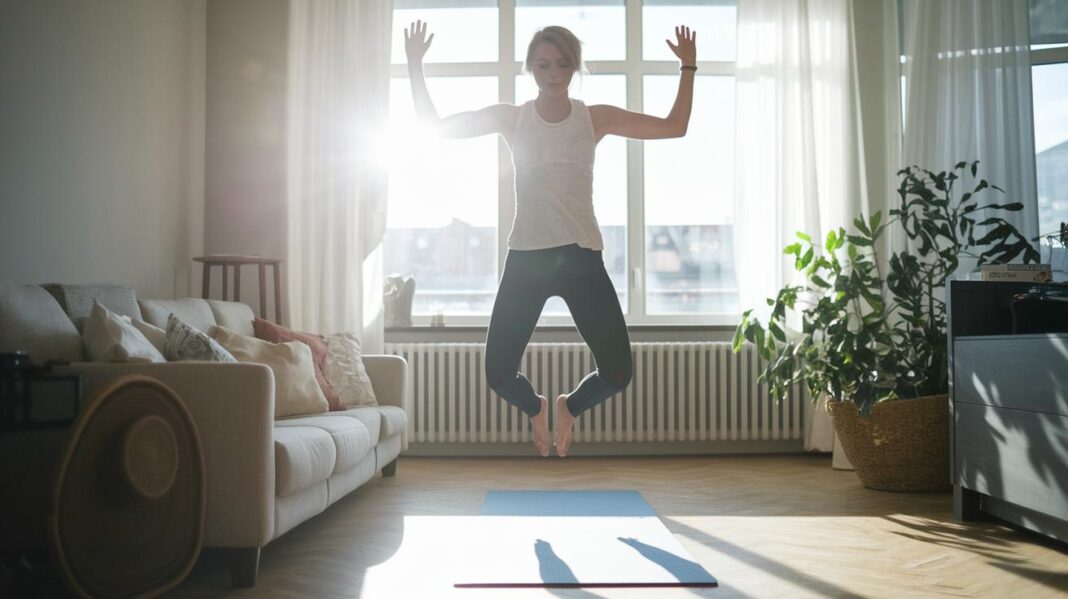
Have you ever noticed how exercising at home can lift your mood? Working out with simple aerobic moves right in your living room can give you more energy and help keep your heart healthy. Picture clearing a little space where you can burn calories, build up heart strength, and let go of stress. Even a small area can set the stage for a routine that makes you feel stronger and brightens your day. In this post, we’ll share some easy moves you can do anywhere to feel amazing every day.
At-Home Aerobic Basics for Cardiovascular Health
At-home aerobic exercise gets your heart pumping and your breath flowing. It helps burn extra calories, which can make losing weight easier. For example, cycling at home might burn around 400 calories in just 30 minutes. It’s like giving your body a little burst of energy each time you work out.
Regular exercise at home does much more than shed calories. It builds your endurance, helps keep your blood pressure steady, and even lowers stress. Every bit of movement makes your muscles stronger and builds stamina over time. It’s a bit like gradually speeding up on a treadmill, each step makes you feel calmer and healthier.
And the best part? You don’t need any fancy equipment. All you really need is a bit of open space to create your personal workout zone. Starting a beginner aerobic routine right in your living room is simple and accessible. Even if you’re new to exercise, you can start small and slowly enjoy all the heart-health benefits.
Bodyweight Cardio Session Without Equipment
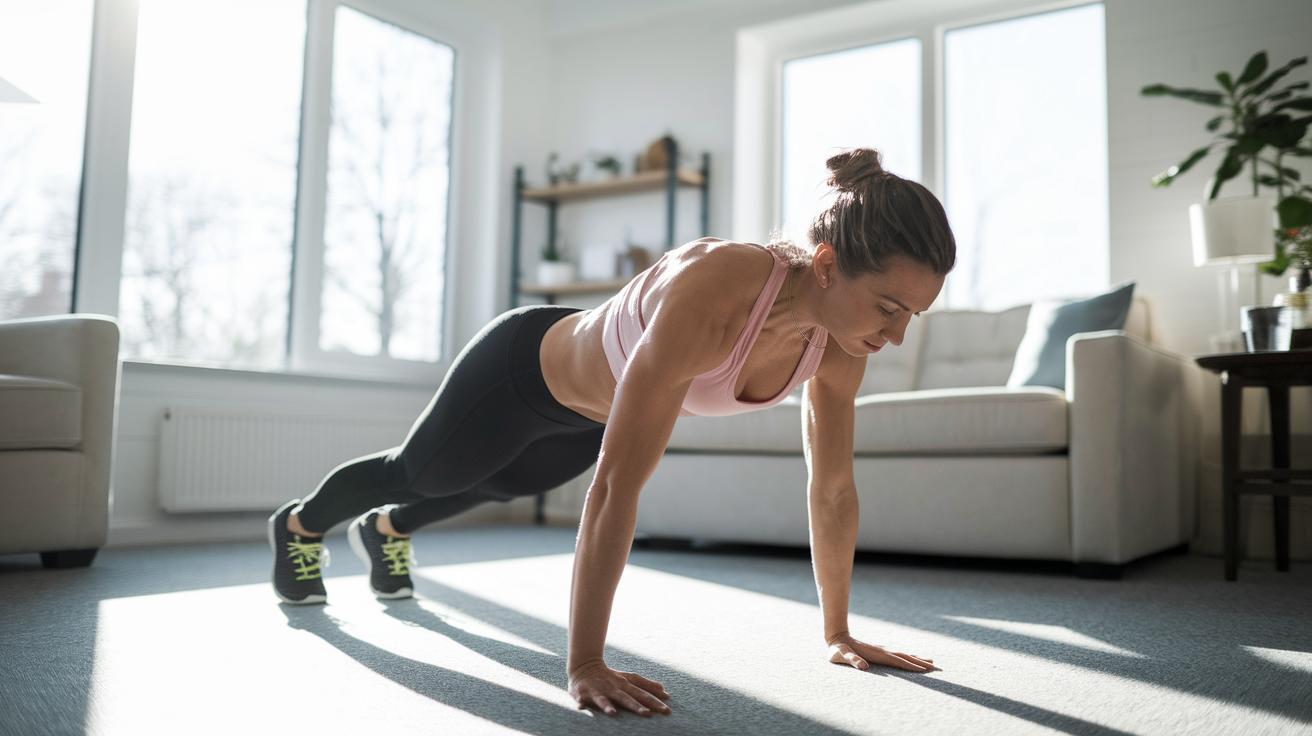
This workout is a simple bodyweight cardio routine that needs no equipment, so you can do it anywhere. It features nine moves that work different muscle groups while keeping your heart pumping. Whether you’re just starting out or looking for a tougher challenge, you can change the amount of time you spend on each move to match your fitness level.
- Jumping jacks – 20 to 30 seconds if you’re a beginner; 60 seconds if you’re more experienced.
- High-knee skips – 20 to 30 seconds for beginners; 60 seconds for those ready for more.
- Ice skaters – 20 to 30 seconds for beginners; 60 seconds for advanced exercisers.
- Jump squats – 20 to 30 seconds for beginners; 60 seconds for a more challenging move.
- Burpees – 20 to 30 seconds for beginners; 60 seconds for advanced.
- Mountain climbers – 20 to 30 seconds for beginners; 60 seconds for more intensity.
- Single-leg hops – 20 to 30 seconds for beginners; 60 seconds for a tougher workout.
- Side-to-side hops – 20 to 30 seconds for beginners; 60 seconds for advanced participants.
- High knees – 20 to 30 seconds for beginners; 60 seconds for those looking to push themselves.
Repeat all nine moves for 3 to 4 rounds, taking a break of 30 to 60 seconds between each move. Each round feels like a mini workout that builds your stamina and leaves you energized. If you’re new to exercise, start with shorter times and slowly work up to longer intervals as your endurance grows. Enjoy each session knowing you’re boosting your heart health and coordination while feeling great afterward.
Low-Impact Domestic Fitness Routine for Joint-Friendly Workouts
Low-impact workouts are perfect if you want to keep active yet spare your joints. They let you move easily and build strength without putting too much stress on your body. This kind of routine is a great pick if you’re just getting started or have joint issues. Plus, it helps you build consistency, a key part of staying healthy over time.
Try these four gentle moves to ease into your routine. First, march in place for 30 seconds, then rest for 15. Picture yourself stepping along to a nice tune. Next, do a toe tap where you lift one foot at a time, keeping the motion small. Then, try a step-touch move by shifting sideways with minimal pressure on your joints. Lastly, finish with a butt-kick march where you lightly tap your rear with each step. Keeping each move to 30 seconds with a 15-second break helps you exercise safely, no matter your fitness level.
Living Room Cardio Series for Fat Burn

Short bursts of high-intensity exercise can kick your metabolism into high gear, so your body keeps burning calories long after your workout is done. It’s like giving your heart little kicks of energy in a tight space, making sure you feel excited during and after your session.
Start off with burpees for 30 to 45 seconds. Drop down into a push-up and then explode into a jump. Take 15 seconds to rest and let your heart settle a bit. Next, try squat jumps where you bend your knees deeply before leaping upward. This move boosts both your legs and core strength.
Then, move on to mountain climbers. Quickly drive your knees toward your chest in a steady, controlled way. This one really fires up your heart and keeps you moving fast. Finally, finish with tuck jumps. Bend your knees slightly and jump high, tucking your knees to your chest as you go. Do each exercise for 30 to 45 seconds, followed by a 15-second pause to maximize the fat-burning effect.
Repeat these four moves 3 to 5 times to keep your body in an active, calorie-burning state even after you’re done working out. Enjoy the energy boost and feel great knowing you’re taking a fun step towards better fitness!
Indoor Aerobic Circuit for Novices with Intensity Guidance
This circuit is a great way to get started at home. You move smoothly through five stations, with each exercise followed by a quick 5-second pause to reposition yourself. It’s set up so you get a clear idea of what to do next, mixing in jogging on the spot to keep your energy up. This format makes it different from the bodyweight session we looked at before.
| Exercise | Duration | Rest |
|---|---|---|
| Jumping Jacks | 20–30s | 60s |
| High Knees | 20–30s | 60s |
| Mountain Climbers | 20–30s | 60s |
| Bodyweight Squats | 20–30s | 60s |
| Jog in Place | 20–30s | 60s |
Repeat the whole circuit three times. If you’re more comfortable with the moves, try holding each exercise for 45–60 seconds with only a 30-second break. And if you really want to push yourself, cut the reposition break down even further. For example, after doing high knees, slide right into mountain climbers with barely any pause.
Senior-Friendly Movement Session Indoors: Modifications and Safety Tips
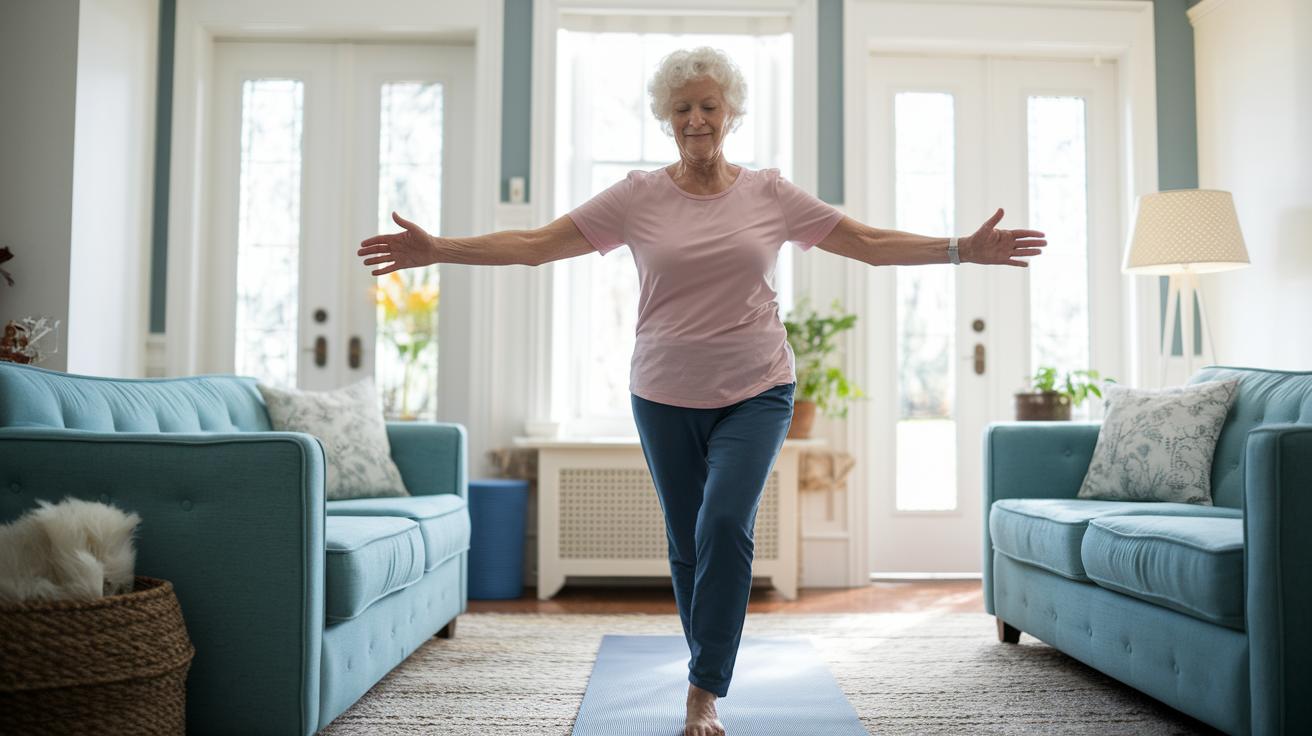
A good workout for seniors begins with a gentle warm-up and ends with a slow cool-down. These simple steps help prevent stiffness and keep your joints happy. Start with five minutes of easy marching in place and gentle arm circles to raise your heart rate at a comfortable pace. Then, finish with five minutes of standing stretches that help relax your muscles and aid recovery.
Warm-Up & Cool-Down
Begin by marching slowly in place for five minutes, gradually picking up your pace as you feel more comfortable. Add some arm circles along the way to ease tension in your shoulders and upper body. When you’re done with your main exercise, take another five minutes for standing stretches. For instance, slowly reach your arms overhead and then lower them to feel a gentle stretch along your sides. This simple routine can really help ease any tightness.
Intensity Adjustments
If you need a workout that’s a bit easier, try working for 20 seconds and then resting for 40 seconds. High-impact moves like jumps can be switched to a gentle step-in-place or a step-touch move. These modifications help keep your heart pumping without putting too much pressure on your knees and ankles.
Hydration & Monitoring
Remember to take small sips of water throughout your session so you stay hydrated. If you track your heart rate or use a continuous glucose monitor, keep an eye on your numbers. Adjusting your workout in real time can help you stay safe and comfortable. Over time, slowly increasing your workout’s duration and intensity will help you build strength without risking injury.
Creating an Effective Home Workout Environment for Aerobic Routines
Clear out a 6 by 6-foot space in your living room or any room where you like to move. Remove any items that could cause trips. Lay down a yoga mat or add a soft carpet over a hard floor so your joints stay safe during your aerobic routine. This small area becomes your personal zone to focus solely on your workout.
Make sure your space feels bright and airy. Open a window or set up a fan to create a cooling flow that keeps you comfortable as you exercise. You might even set up a TV or tablet to stream lively music or instructor-led videos, anything that gets you moving.
Add a few simple accessories to boost your workout. Keep a towel nearby to wipe away sweat, a water bottle to stay hydrated, and a timer to track your intervals. These little touches help create a distraction-free spot where you can enjoy every part of your aerobic session.
Final Words
In the action, this article showed you how to boost your heart rate and overall well-being using simple routines at home. It described various workouts, from bodyweight cardio to low-impact sequences and even easy circuits for seniors, each with clear steps and practical set-up tips.
By embracing aerobic exercise at home, you'll find fun and effective ways to raise energy levels and manage weight. Enjoy trying these tips and feel the positive change in every beat of your day.
FAQ
What does aerobic exercise at home with no equipment involve?
Aerobic exercise at home with no equipment uses bodyweight moves like jumping jacks, burpees, and high knees to raise heart rate and boost endurance with just an open space.
What are some examples of aerobic exercise you can do at home?
Examples of home aerobic moves include jumping jacks, burpees, high knees, mountain climbers, jump squats, step touches, and jogging in place, all designed to get your heart pumping.
How does aerobic exercise at home help with weight loss and benefit beginners?
Aerobic workouts raise heart rate to boost calorie burn, aiding weight loss while low-impact moves and gradual intensity make them ideal for beginners looking to improve cardiovascular health.
What is anaerobic exercise?
Anaerobic exercise is high-intensity activity performed in short bursts using stored energy without relying on oxygen, like sprints or heavy lifting, that builds strength and power.
Can aerobic exercise help reduce belly fat?
Aerobic exercise increases heart rate and burns calories, which can help reduce belly fat when paired with a balanced diet and overall healthy lifestyle habits.
What is considered the best aerobic exercise at home?
The best aerobic exercise at home is one that fits your space and fitness level, such as jumping jacks or high knees, providing an effective, accessible way to boost heart rate.
What are five examples of effective aerobic exercise moves?
Five effective aerobic exercises include jumping jacks, high knees, burpees, mountain climbers, and jogging in place, each designed to elevate heart rate and improve endurance.
Is 20 minutes of aerobic exercise enough for a workout?
Twenty minutes of aerobic exercise can be sufficient if performed at a level that raises your heart rate, enhancing endurance and calorie burn as part of a consistent fitness routine.
What aerobic exercise methods are popular for home workouts?
Popular methods include high-intensity interval training, circuit training, and street workout routines, all of which offer varied, engaging ways to improve cardiovascular fitness at home.

