
Ever wonder if your eating habits might be keeping your muscles from getting stronger? A good diet does more than fuel workouts, it helps repair and build your muscles too. Think of it like putting high-quality fuel in your car; lean proteins, whole grains, fruits, and healthy fats give your body the boost it needs for better gains.
In this guide we explain how a smart mix of nutrients keeps your muscles in top shape. Even a small change in your diet can lead to big improvements in strength. Ready to learn how to get more out of every workout? Let’s dive in and set you up for strong gains!
How a Balanced Diet for Muscle Growth Fuels Strength Gains
Eating right is key to building muscle and feeling your best. When you load your plate with lean proteins, whole grains, fruits, veggies, and good fats, you’re not just fixing up your muscles. You’re also keeping your bones strong, helping your body run smoothly, and giving your immune system a boost. It’s a lot like a nourishing meal that revs you up for a big day.
A little extra energy goes a long way. By adding about 200 to 300 extra calories each day, you give your body the fuel it needs to repair and grow stronger muscles. Think of it as topping up your car with premium fuel, those extra calories help you work out harder and keep muscle breakdown at bay.
Mixing lean proteins, whole grains, and healthy fats sets you up for both a great workout and a speedy recovery. Proteins deliver the building blocks needed for muscle repair, while whole grains give you steady energy to power through tough sessions. Good fats support hormone balance and help your body soak up essential vitamins. Together, they lay the perfect foundation for strong gains every time you hit the gym.
Macronutrient Breakdown for Healthy Muscle Growth
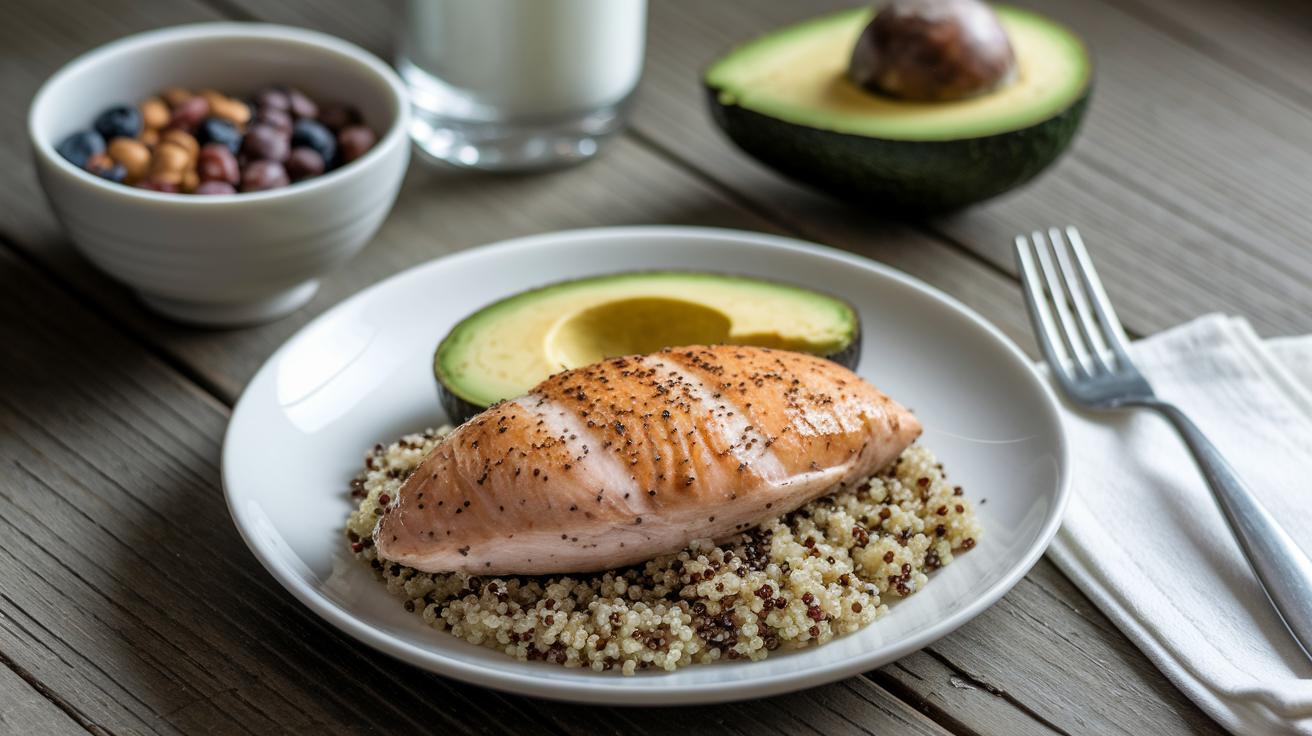
When you're working on building strong muscles, having the right mix of protein, carbs, and fats really makes a difference. Many folks find that a split of 30% protein, 45% carbohydrates, and 25% fats gives them the building blocks they need. This balance helps repair and build muscle, gives you steady energy for those intense workouts, and supports the hormones your body needs for recovery and overall health.
Protein
Protein is the key to mending and growing muscle. Experts usually suggest eating between 1.2 and 1.5 grams of protein per kilogram of body weight if you're into strength training. It isn’t just the amount that matters, the quality of your protein counts too. Foods full of leucine (an amino acid that really jumps into action to help build muscle) can make a big difference. Check out this table for some protein-packed options:
| Food | Protein (g) |
|---|---|
| 4 oz chicken breast | 26 |
| 4 oz lean beef | 25 |
| 3 large eggs | 18 |
| 1 cup Greek yogurt | 20 |
| 4 oz turkey breast | 24 |
| 1 cup low-fat cottage cheese | 28 |
| 1 cup milk | 8 |
Carbohydrates
Carbohydrates are super important too because they give you the glucose your muscles need during high-intensity workouts. Aiming for 3–5 grams per kilogram of body weight each day will keep your energy levels up and help you push through those tough sessions. Stick with whole grains, oats, or sweet potatoes, which act like slow-burning fuel to keep your energy steady without wild swings in blood sugar.
Fats
Healthy fats do more than just add flavor to your meals, they’re key players in hormone production and help in absorbing vitamins A, D, E, and K. Foods like avocados, nuts, and fatty fish are great choices. They not only boost the energy density of your meals but also support overall muscle function, making them a must-have part of any muscle-building plan.
Meal Timing and Calorie Surplus Strategies for Muscle Gains
Before your workout, have a meal that includes 20 to 30 grams of protein and 40 to 50 grams of carbs about 2 to 3 hours ahead. This meal gives your muscles the building blocks they need and steadily fuels your energy. If you’d like an extra boost, try a small snack 15 to 30 minutes before you start. It can help keep muscle breakdown at bay while gently adding a calorie surplus to support muscle repair and growth.
After your workout, it’s important to eat a balanced meal too. A mix of protein and carbs helps fix muscle fibers and tops up your energy stores. Whether you sip on a smoothie or sit down to a light meal, these nutrients speed up recovery and keep your energy levels ready for the next session. Keeping a small calorie surplus throughout the day creates the right environment for muscle gains to thrive.
| Timing | Protein (g) | Carbs (g) |
|---|---|---|
| Pre-Workout (2–3 h) | 20–30 | 40–50 |
| Pre-Workout Snack (15–30 min) | Light amount | Small portion |
| Post-Workout | Recovery dose | Refuel carbohydrates |
Top Whole-Food Sources for Protein, Carbs, and Fats
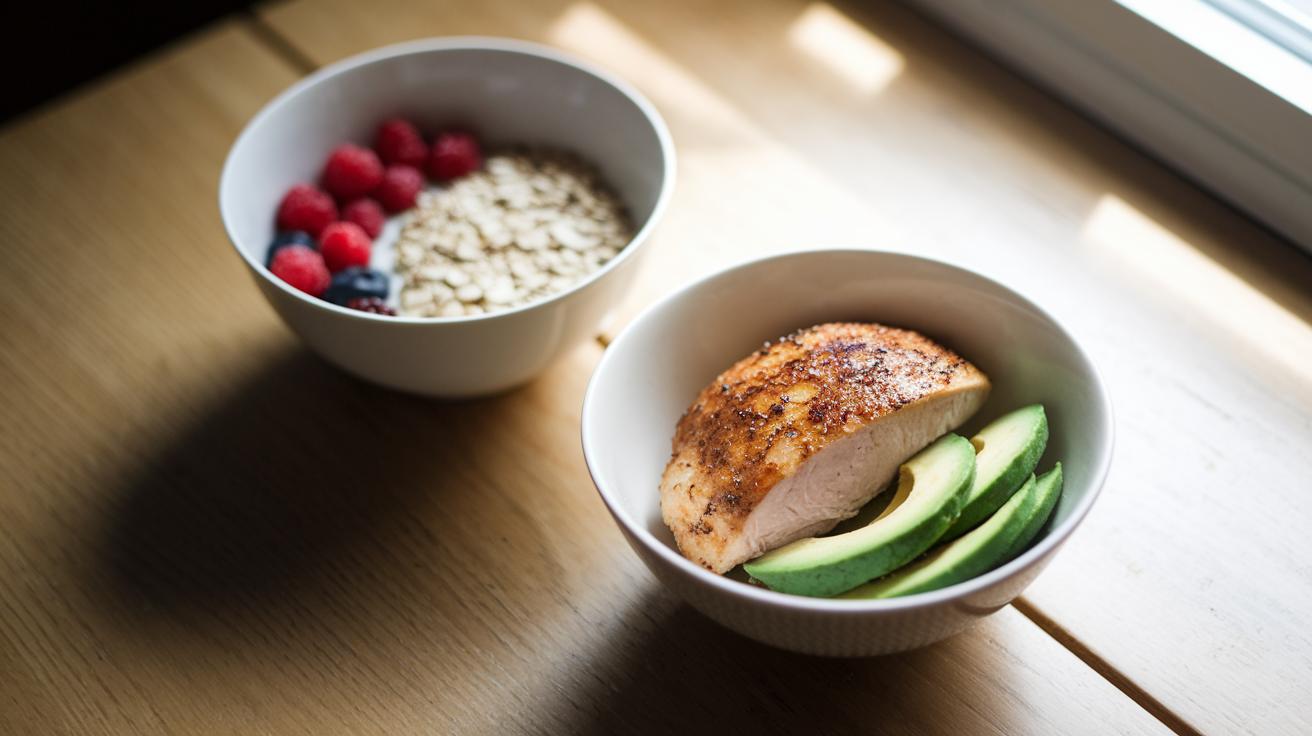
Lean proteins help build muscle and repair body tissues. For example, a modest serving of chicken breast (about 4 ounces) gives you 26 grams of protein. Egg whites, lean beef, turkey breast, low-fat cottage cheese, and Greek yogurt are also excellent choices. Picture the size of your palm for a chicken breast serving, it’s an easy way to guide your portions.
Complex carbohydrates power your workouts with steady energy and help keep blood sugar steady. A cooked cup of oats provides 27 grams of carbs, offering slow-burning energy, while a medium sweet potato brings 24 grams of carbs plus fiber to support digestion. Think of your morning oats as a battery charger for your muscles.
Healthy fats add calories and help your body absorb vital nutrients. Half a medium avocado supplies 15 grams of fat, and an ounce of almonds comes with 14 grams of fat. A simple calorie tracking method can help you manage portions well. Imagine a handful of almonds as a snack that boosts your strength without overloading your calorie goals.
Micronutrient Essentials and Hydration for Muscle Repair
Micronutrients are tiny helpers that keep your muscles working well. Vitamin D is important because it helps your body soak up calcium, which is needed for smooth muscle movements. Experts suggest getting 600–800 IU of vitamin D daily. Calcium is also key, about 1,000 mg each day helps keep your bones hard and your muscles strong. Magnesium, recommended at around 310–420 mg a day, helps your body relax and recover, while zinc, at 8–11 mg per day, is essential for building proteins and supporting your immune system. Including anti-inflammatory foods like berries, leafy greens, and even nutrient-rich spirulina can speed up your recovery and reduce soreness. All these nutrients work together to help your muscles repair and stay resilient under stress.
Staying hydrated is just as important for muscle repair and overall performance. Even a small loss, just 2% of your body water, can make you feel weaker and tire you out faster. Aim to drink about 3–4 liters of water every day. If you notice signs like a dry mouth, feeling lightheaded, or a drop in your workout performance, it might be time to drink up. Keeping well-hydrated means your muscles and your whole body can perform at their best.
Sample Structured Meal Plan and Muscle-Building Recipes

This plan sets you up with about 1,500 calories and roughly 93 to 126 grams of protein for the day. Each meal focuses on foods that help your muscles recover while keeping your energy steady.
Breakfast
Kick off your day with a simple egg and avocado toast. One slice of whole-grain toast spread with mashed avocado and a scrambled egg gives you around 215 calories and 15 grams of protein, plus some good carbs to get you moving.
Morning Snack
Try a Chocolate-Peanut Butter Protein Shake next. This delicious drink supplies 402 calories and 26 grams of protein, blending quality protein and carbs to boost you before your workout.
Lunch
For lunch, enjoy a warm bowl of Stuffed Cabbage Soup. With 316 calories and 21 grams of protein, it combines lean protein and veggies for a filling meal that aids muscle repair.
Afternoon Snack
Refuel with a bowl of fresh Greek yogurt and berries. Around 215 calories and 15 grams of protein, this snack gives you a nice mix of protein and natural carbs to keep your energy on track.
Dinner
End your day with a Turkey BLT Wrap. This wrap packs 362 calories and 17 grams of protein from lean turkey, crisp lettuce, and whole-grain carbs, rounding out your high-protein day.
Prep tip: Make a big batch of Stuffed Cabbage Soup and portion out your Greek yogurt bowls ahead of time. For more ideas and meal plans, visit https://healthlystats.com?p=28
Final Words
In the action, we explored how proper nutrition drives muscle growth by focusing on quality proteins, carbs, and healthy fats. We covered calorie surplus tips, meal timing for workouts, and the benefits of micronutrients and hydration for overall strength and wellness.
This content shows that following a well-planned, balanced diet for muscle growth can boost muscle repair and support daily vitality. Keep putting these practical steps into play, and enjoy the benefits of a healthier, more energized life.
FAQ
What is a 7-day muscle gain diet plan and are there PDF versions available?
A 7-day muscle gain diet plan offers a balanced schedule of meals tailored to support strength gains, with many resources available in PDF format, including options for male-specific and general muscle-building needs.
What is a gym diet plan for muscle gain?
A gym diet plan for muscle gain focuses on balanced meals made up of lean proteins, complex carbohydrates, and healthy fats to fuel workouts, support recovery, and promote muscle repair.
What is the best diet to build muscle?
The best diet to build muscle features a mix of lean proteins, nutrient-dense carbohydrates, and healthy fats, along with a slight calorie surplus and well-timed meals to enhance muscle repair and growth.
What does the 60 25 15 meal plan mean?
The 60 25 15 meal plan allocates 60% of your calories from carbohydrates, 25% from proteins, and 15% from fats, ensuring energy for workouts, muscle repair, and overall hormonal balance.
Are 2 eggs enough to build muscle?
Two eggs provide a quality source of protein and essential amino acids, yet combining them with other protein sources in your meals can better support continuous muscle repair and effective growth.
How can I eat 3000 calories a day to build muscle?
To eat 3000 calories daily for muscle gain, spread nutrient-dense foods over multiple meals, including ample lean proteins, complex carbs, and healthy fats, thereby supporting energy needs and muscle recovery.

