Do you ever wonder why your lower back still aches after a long day at your desk? Sometimes a few simple home exercises can make a big difference. Think of these moves as gentle nudges that remind your body it can be strong and supported with just a few minutes of effort.
This guide breaks down seven easy exercises that help build up your lower back, core, and glutes. Ready to turn everyday routines into quick bursts of strength and comfort? Give these a try and feel the difference.
Lower Back Exercises at Home: 7 Essential Moves for Pain Relief
This guide walks you through seven simple exercises that you can do at home without any equipment. You’ll boost your lower back, core, and glutes while making your spine stronger. Think of each set as a quick movement break, much like taking a short walk to shake off stiffness. Try to complete two rounds of every exercise with a one-minute rest between rounds.
We start with:
- Dead Bug
- Toe Taps
- Glute Bridge
- Side Plank
- World’s Greatest Stretch
- Hamstring Stretch with Straight Leg Raise
- Founder Exercise
Dead Bug
Lie on your back with your arms pointing up and your knees bent at a right angle. Gently push your lower back into the floor to engage your core. Then, slowly extend your right leg until it’s almost touching the ground, while keeping your left arm steady. Bring your right leg back and switch sides. Aim for 10 reps per side. Move slowly so your back doesn’t arch. If you feel any discomfort, try reducing how far you lower your leg. Think of it like carefully guiding a swinging pendulum.
Toe Taps
Start by lying on your back just like in Dead Bug. Keeping your core tight, slowly lower one foot until your toes lightly tap the floor. Bring the leg back up and then repeat with the other foot. Do 10 taps on each side and always keep your back pressed down. This move is all about maintaining a strong center, imagine your toes softly tapping in rhythm with your favorite song.
Glute Bridge
Lie on your back with your knees bent and feet flat on the floor, spaced about hip-width apart. Press into your heels, squeeze your glutes, and lift your hips upward. Hold the top position for 2 to 3 seconds, really feeling your lower back and core work. Then lower your hips slowly. Aim for 12 to 15 reps in each round. Keep your shoulders relaxed and avoid pushing your back too far. Picture it like slowly lifting a drawbridge with steady control.
Side Plank
Lie on one side and position your elbow directly under your shoulder. Stack your legs on top of each other and lift your hips so your body forms a straight line from head to toe. Hold this position for 20 to 30 seconds on each side. Make sure your core stays tight and your hips don’t droop. If the full plank is too tough, lower your bottom knee for extra support. Think of it like balancing on a narrow beam.
World’s Greatest Stretch
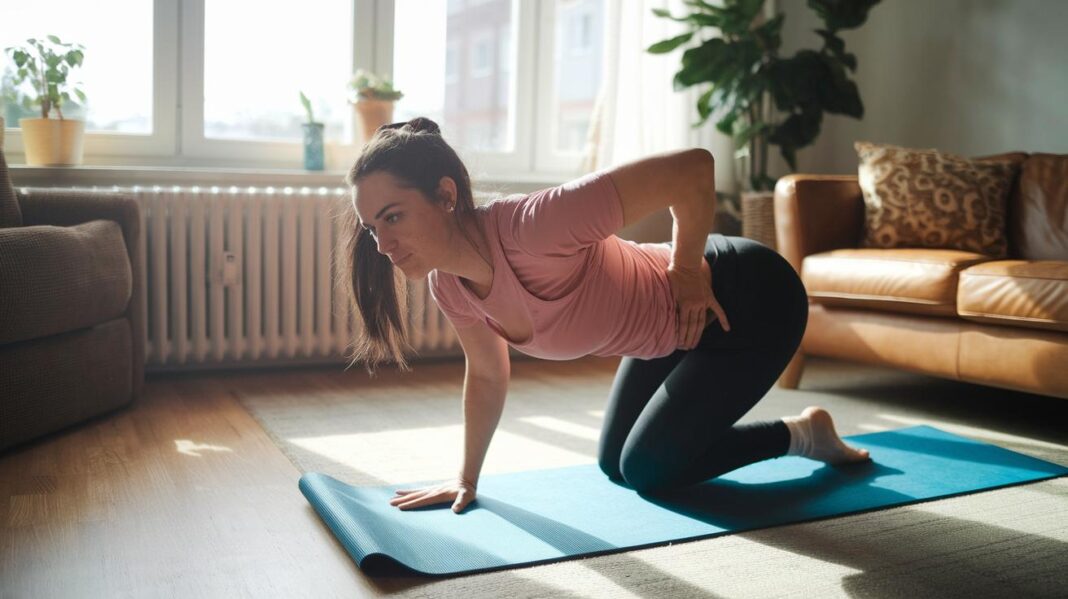
Step your right foot forward into a deep lunge while stretching your left leg out straight behind you. Rest your left hand on the floor for balance and lift your right arm toward the sky. Gently twist your torso, reaching your right arm toward the floor to stretch your hips and spine. Hold for 20 to 30 seconds before switching sides. Move slowly to give your body time to adjust. Keep your back straight and avoid twisting too far. Imagine you’re opening a window, letting fresh air spread through your body.
Hamstring Stretch with Straight Leg Raise
Lie on your back and lift one leg straight up while keeping the other leg bent with the foot flat on the floor. Hold your raised leg or loop a towel around your foot to deepen the stretch gently. Keep the stretch for 20 to 30 seconds on each side while pressing your lower back into the floor. Avoid bouncing or forcing the stretch. Picture it like slowly opening a stubborn door, you need steady, gentle effort to make progress.
Founder Exercise
Stand with your feet about shoulder-width apart and get into a slight squat. Slowly bend at your hips with a flat back and extend one leg backward to activate your glutes and lower back. Return to standing and switch legs. Do 10 reps on each side with smooth, controlled movements. Be sure to keep your core engaged throughout to protect your back. Think of it as leaning against a wall and then stepping away slowly, building strength without strain.
Understanding Lower Back Anatomy for Effective Home Workouts
Our spine is a brilliant piece of engineering. It has 33 small bones called vertebrae, cushioned by water-filled discs, which come together in five regions to help hold us up every day. The lower back, also known as the lumbar section, carries most of the weight and is often the part that feels the strain. So, adding some simple home exercises to strengthen your lower back can really help reduce pain and keep you moving freely.
The muscles that help support your lower back are super important. One key muscle is the transverse abdominis, a deep core muscle that works like a natural belt to hold you in. Then you have the erector spinae, which runs along your back and helps you stand tall. And don’t forget about the glute muscles; these not only lift but also stabilize your lower back during everyday movements.
If your lower back ever feels stiff, aches when you move, or just doesn’t seem to have the range of motion it used to, those might be signs it’s a bit weak. If these feelings stick around for a while, it’s a good idea to check in with a professional. The good news is, even a few gentle exercises at home can build up your strength over time, making daily tasks easier and lowering the chance of injury.
Fun fact: your spine carries nearly 80% of its daily load just from routine activities. This really shows how crucial it is to keep those supporting muscles strong.
Progressive Lower Back Training at Home with Dumbbells
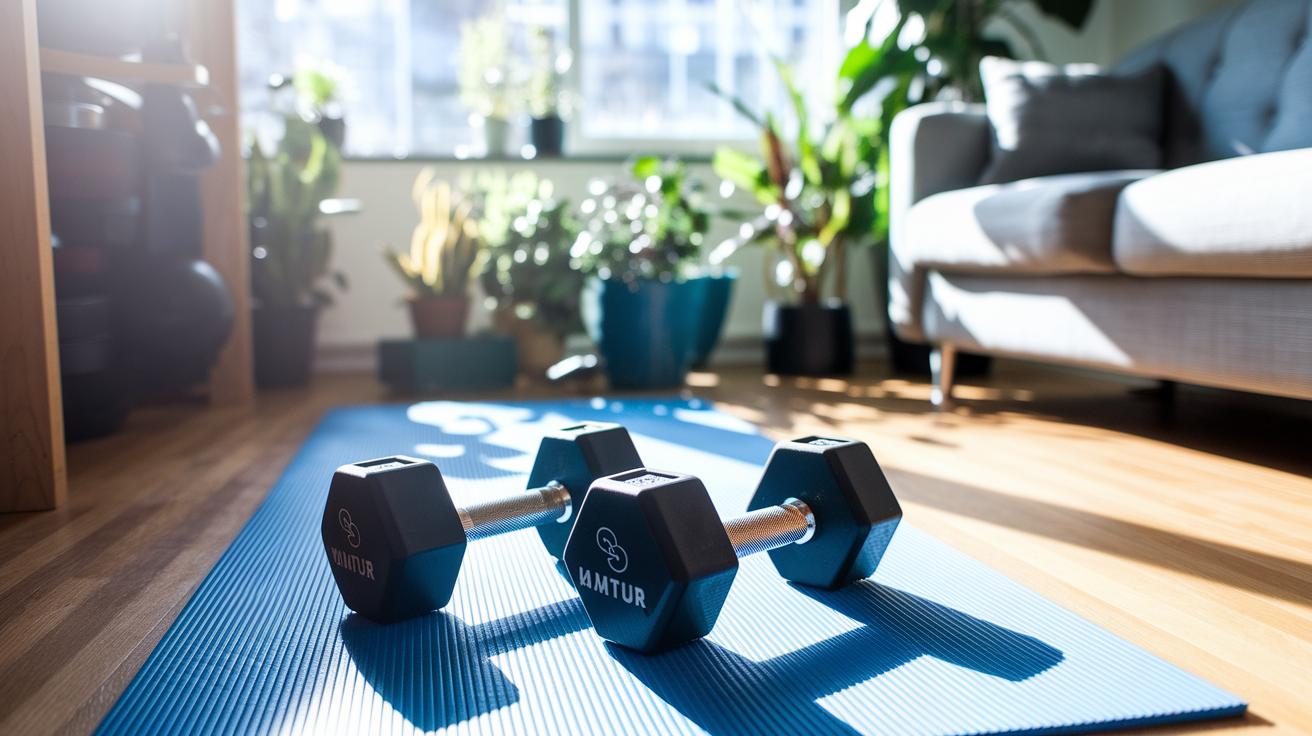
Using a pair of light dumbbells (around 5 to 10 pounds) can safely boost your lower back workout. This method works great with moves like the dumbbell deadlift and the weighted glute bridge. It’s all about keeping proper form with your hips, slowly increasing the weight, and making sure your spine stays in a safe, neutral position.
-
Dumbbell Deadlift
- Stand with your feet about shoulder-width apart while holding a dumbbell in each hand.
- Bend at your hips to lower the weights along your legs, keeping your back straight the entire time.
- As you rise back up, use the muscles along your spine to help you stand tall.
- Remember: start with lighter weights and keep your movements smooth to perfect your form.
-
Weighted Glute Bridge
- Lie down on your back with your knees bent, and gently rest a dumbbell on your lower stomach.
- Press through your heels and squeeze your glutes to lift your hips off the ground.
- Pause for a moment at the top, then slowly lower your hips back down.
- Focus on activating your hip muscles and keeping your back in a neutral, safe position throughout the move.
For more tips and guidance on dumbbell strength exercises, check out the full guide at dumbbell strength training.
Safety Tips and Modifications for Home Lower Back Exercises
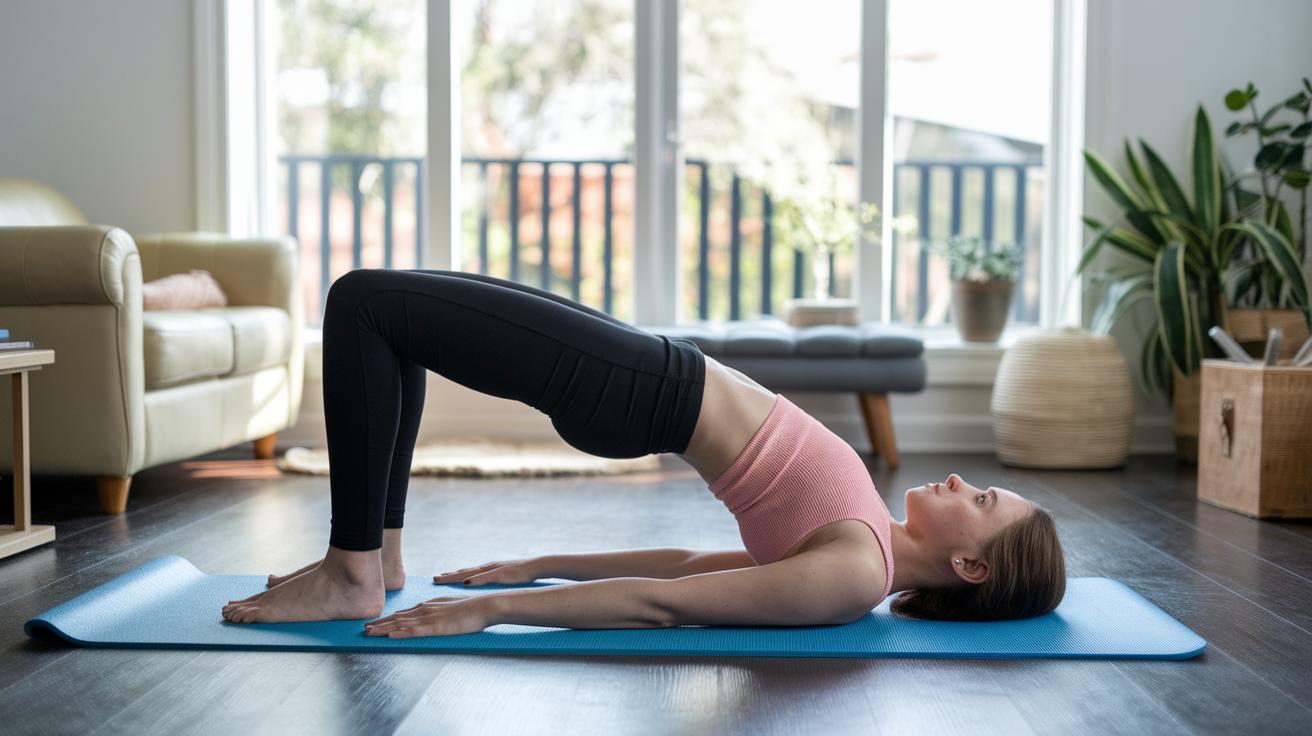
Listen to your body as you exercise. If something doesn't feel right or you notice pain, it might be time to slow down or change the move. For instance, if a full-range motion is too tough, try a gentler version like the bent-knee bridge or a supported Dead Bug. Keeping a steady posture is key, think of your spine as a line of sturdy building blocks that need even support.
- Begin slowly and let your body warm up with each move.
- Focus on keeping your spine neutral and your core engaged.
- Sneak in little movement breaks throughout your day, like a quick two-minute walk or some gentle stretches to ease stiffness.
- If pain becomes severe or sticks around, check in with a healthcare provider before continuing.
Even small changes can help make these exercises a lot easier, so everyone, from beginners to seniors, can enjoy a safe and friendly routine for a healthy back.
Final Words
In the action of taking charge of your health, this guide brings together seven key moves, practical safety tips, and smart ways to boost your routine with dumbbells. It explains how your spine works and why each exercise, from the Dead Bug to the Founder Exercise, is vital for reducing discomfort and building strength.
Remember, every step counts. Embrace lower back exercises at home to feel more energetic and supported every day. Keep moving, stay safe, and enjoy the benefits of improved vitality.
FAQ
What do physiotherapy exercises for lower back pain (including PDF resources) involve?
The physiotherapy exercises for lower back pain combine targeted moves to improve mobility, strengthen core muscles, and ease discomfort. Often, PDF guides detail proper form and modifications for safe, effective practice.
How can I strengthen my lower back at home without equipment?
Home strengthening involves bodyweight moves like glute bridges, dead bugs, and side planks that build core stability and reduce pain. These exercises can be easily done without any extra gear.
What lower back exercises work both at home and in the gym?
Both settings can benefit from moves such as glute bridges and dead bugs. While home routines use bodyweight exercises, gym variations may add light dumbbells for extra resistance while keeping proper form.
What is the single best exercise for lower back pain?
The glute bridge stands out as a top exercise by engaging key muscles that support the lower back, improving stability and easing pain when performed correctly and progressively.
What is the 30-second stretch that relieves back pain?
The 30-second stretch often recommended is a form of the world’s greatest stretch. It targets tight muscles around the lower back and hips, providing quick relief when held for about half a minute.
What are the big three exercises for lower back pain?
The big three commonly include moves like the dead bug, glute bridge, and side plank, which work together to enhance core strength, promote stability, and help reduce lower back discomfort.

