
Have you ever wondered why kettlebell workouts are catching on with so many fitness fans? They aren’t like regular weights. Kettlebell moves make your whole body work together. They help build muscle strength, improve your balance, and even get your heart pumping. Think of your body as a smooth-running machine where every swing or squat helps tune up different muscles at once.
In this article, we’ll share how kettlebell training can boost your fitness and turn your routine into a full-body workout that truly works for you.
Fundamentals of kettlebell strength training
Kettlebell training is a game changer compared to using dumbbells because it makes you work multiple muscle groups at once. A kettlebell has just one weight spot, which means your body has to work a little harder to balance itself during moves like swings, presses, and squats. So, while dumbbells often target one muscle at a time, kettlebells make your back, shoulders, core, and legs work together. Think about it like this, a kettlebell swing not only helps tone your muscles, it also gives your heart a good little workout.
Another great thing about kettlebell workouts is that they boost your grip strength and coordination. Every time you lift or swing a kettlebell, you're training your wrists and forearms. This builds up your hands, helps improve your posture, and keeps your joints healthy. Plus, the smooth and controlled movements make these exercises easier on your joints, making them a smart choice if you're dealing with mild pain or recovering from an injury.
In short, kettlebell strength training packs a lot of benefits into one workout. It gives you a full-body exercise, offering both heart-pumping cardio and muscle-building moves. It challenges your grip with every rep and builds up deep, stabilizing muscles. All of this helps boost your overall endurance and muscle tone, making your workouts both effective and kind to your body.
Building a kettlebell strength training program

Start your workout routine on a steady schedule, training 3 to 4 days each week. Use simple moves like swings, goblet squats, and deadlifts. This regular practice helps you build strength, while 1 to 2 days off give your muscles time to repair and grow.
Break your workouts into different stages. In the Foundation Phase, focus on learning the proper technique to create a solid base. During the Hypertrophy Phase, try to do 8 to 12 repetitions per exercise to boost muscle growth. In the Power Phase, add some explosive sets that challenge your strength. You can also split your sessions by movement patterns, such as working on your upper body, lower body, and core on separate days.
Keep progression in mind at every step. Once you feel comfortable with your basic moves, slowly add more weight or extra repetitions every 1 to 2 weeks. This gradual increase helps your muscles adapt without causing injury. After each workout, include a few mobility exercises and stretches to cut down on tightness and help your body stay flexible. And always listen to your body, rest days are just as important as workout days.
This balanced mix of exercise, steady progression, and proper recovery will build your endurance and improve your overall fitness.
Essential kettlebell strength exercises for all levels
Kettlebells are a fantastic tool that helps you work many muscle groups in one go. Whether you’re just starting out or you’re already experienced, these exercises can boost your strength, balance, and endurance. Each move targets specific muscles while using nearly every part of your body. This approach builds real-life strength and stability.
Here are some exercises to get you started:
- Swing – Works the glutes, hamstrings, and core – 3 sets of 10 to 15 reps
- Goblet Squat – Focuses on the quads and glutes – 3 sets of 8 to 12 reps
- Turkish Get-Up – Improves core and shoulder stability – 3 sets of 3 reps on each side
- Clean & Press – Strengthens the shoulders, arms, and core – 3 sets of 6 to 8 reps
- Single-Arm Row – Builds strength in the upper back – 3 sets of 8 reps on each side
- Overhead Reverse Lunge – Targets the quads and glutes – 3 sets of 8 reps on each leg
- Deadlift – Engages the hamstrings and lower back – 3 sets of 8 to 10 reps
- Biceps Curl – Develops the forearms and arms – 3 sets of 10 to 12 reps
It’s important to adjust your sets and reps to match your fitness level. Beginners might start with fewer reps to focus on proper form. As you get stronger, try increasing the number of reps or using a heavier kettlebell. Experiment with these changes until you find the perfect mix that challenges you without compromising on safety.
Progressing your kettlebell strength drills

When you start kettlebell drills, it's all about taking small, steady steps that boost your strength and coordination while keeping your workouts safe and effective. Here’s a simple path to move you smoothly from beginner moves to more challenging techniques.
- Begin with two-handed swings to set a strong base.
- Shift to one-handed swings to really test your balance.
- Try alternating swings so both sides get equal attention.
- Once you're comfortable, add power swings and snatches to ramp up the intensity.
- Finally, work up to double-kettlebell swings and Turkish Get-Ups, adding little pauses or changing the speed to mix things up.
Focus on perfect form every single time. Start with lighter weights and keep your back straight with your core engaged. As you feel more confident and build strength, you can gradually add more weight or complexity, always keeping that form in check. Taking it slow and steady not only helps prevent injuries but also turns each rep into a meaningful step toward a stronger, more empowered you.
Proper kettlebell strength training form and safety tips
Keep your back straight by using a neutral spine on every rep. Engage your core like it's your body's natural support system. Hinge at your hips and keep the weight near your heels. This technique stops your lower back from rounding and prevents strain during swings or presses. Think of your core as the anchor that holds everything together.
Remember to focus on your breathing during your workouts. Breathe in as you hinge and breathe out when you're working hard. This keeps your movements steady and helps you stay relaxed. Also, keep your shoulders loose and your wrists comfortable so you don't build up extra tension. Good alignment is the key to every solid rep.
Before you start, warm up with moves like leg swings and arm circles to get your muscles ready. After your workout, take time to foam roll and ease any tight spots. Taking a couple of rest days each week and getting enough sleep are super important for recovery. These simple steps protect your joints and boost your overall strength and balance during kettlebell training.
Structuring kettlebell strength circuit routines
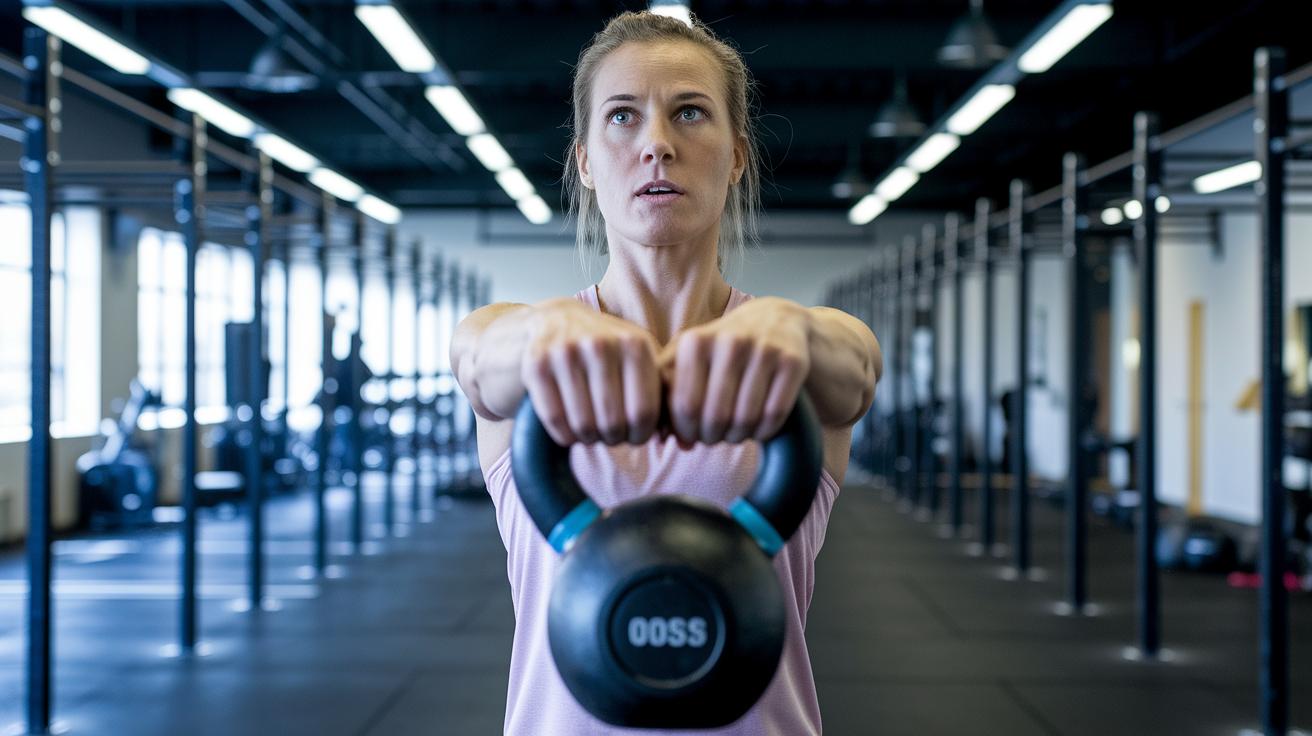
Imagine a circuit where you work hard for 30 seconds and then get 15 seconds to catch your breath. This simple back-and-forth keeps your heart beating fast and your muscles active. It mixes strength and cardio in one quick workout, all while helping you move the kettlebell in a smooth and steady way.
| Exercise | Duration | Rest |
|---|---|---|
| Swings | 30 sec | 15 sec |
| Cleans | 30 sec | 15 sec |
| Goblet Squats | 30 sec | 15 sec |
| Push Presses | 30 sec | 15 sec |
| Planks | 30 sec | 15 sec |
If you want to raise the intensity, start by choosing a kettlebell that challenges you without hurting your form. After a few weeks, if the circuit starts to feel too easy, try moving up in weight or add an extra 10 seconds of work for each exercise. You can also mix in new moves or swap one move for another that feels more dynamic, as long as you stick with the same rest time. This way, every session slowly pushes your limits and makes your workout a bit tougher and a lot more rewarding.
Advanced kettlebell strength training techniques
Power swings mean using your hips in a big, burst-like movement while keeping your body steady. As you swing, push your hips hard and let the kettlebell flow in a smooth, controlled path. This exercise works your glutes, hamstrings, and back, and it even helps build a stronger grip and better coordination. Imagine every swing igniting a burst of energy through your whole body.
Kettlebell snatches take your skills up a notch. They start with a strong hip hinge and quickly transition to catching the kettlebell overhead with a locked arm. This move not only builds upper-body strength but also teaches you how to switch smoothly between explosive power and stability. Think of it as your body working together like a well-tuned machine, moving energy from your legs and hips all the way to your arms.
For an extra challenge, mix in some plyometric moves and multi-step complexes. Try squat jumps while holding the kettlebell or even an overhead clap to really get your heart pumping. These fast-paced drills activate your quick-response muscles for explosive power. And when you combine exercises like cleans, front squats, and push presses, you test your endurance and strength all at once. Throughout these workouts, keep your back muscles engaged, brace your core, and always watch the kettlebell’s path to stay safe and perform at your best.
Final Words
In the action, this article showcased the core ideas of kettlebell strength training. It walked through dynamic full-body moves, smart program structure, and safe form practices while outlining advanced drills for experienced users.
The guide emphasized routine planning, gradual progression, and recovery strategies to build strength effectively. Keep embracing these practical steps to boost endurance, muscle tone, and overall vitality. Remember, consistency in kettlebell strength training creates real change and helps you make everyday wellness progress.
FAQ
What do Reddit discussions say about kettlebell strength training?
Reddit discussions reveal that kettlebell strength training is celebrated for its efficiency, full-body engagement, and versatility, with enthusiasts sharing routine tips and safety advice.
Where can I find a kettlebell strength program PDF?
A kettlebell strength program PDF is available on several fitness websites and community forums, offering structured workouts and clear progressions for easy-to-follow training.
How does kettlebell strength training work at home?
Kettlebell strength training at home is popular for its convenience and effectiveness, combining dynamic exercises that build functional strength while requiring minimal space and equipment.
What kettlebell exercises are best for beginners?
Kettlebell exercises for beginners emphasize foundational moves like swings and goblet squats, which build core, leg, and shoulder stability while promoting proper form and safety.
Which kettlebell exercises target belly fat?
Kettlebell exercises for belly fat, such as swings and snatches, combine cardio with strength moves to boost metabolism, trim midsection fat, and improve overall core strength.
What benefits do kettlebell swings offer?
The kettlebell swing is a dynamic exercise that targets the glutes, hamstrings, and core, boosting strength and endurance while also enhancing grip stability and cardiovascular fitness.
What does a full body kettlebell workout include?
A full body kettlebell workout includes a mix of exercises like swings, goblet squats, rows, and presses, working multiple muscle groups together for balanced strength and endurance.
What is a kettlebell snatch and how is it performed?
The kettlebell snatch is an explosive move that lifts the weight overhead in one fluid motion, using hip drive and core coordination to develop power and overall strength.
Can kettlebells alone build muscle and strength?
Kettlebells alone can build muscle and strength by offering dynamic, functional workouts that engage multiple muscle groups, provided proper technique and progressive overload are applied.
Is a 30-minute kettlebell session sufficient to build muscle?
A 30-minute kettlebell workout can effectively build muscle if it is high-intensity and well-structured, combining strength and cardio elements for a compact and challenging routine.
What disadvantages might one face with kettlebell training?
Disadvantages of kettlebell training include potential risks of improper form and limited weight progression, making it important to emphasize technique and vary routines to prevent strain.

