
Have you ever thought a simple band could give your muscles a real boost? Even if it looks small, a resistance band works hard with every move you make. These bands started out in rehab, but now they easily fit into any workout spot, from your living room to the gym. They add a fresh twist to strength training by helping your muscles work safely and effectively. Let's dive into how this small, handy tool can boost your routine and transform your fitness journey.
Maximizing Strength Gains with Resistance Bands
Resistance bands keep your muscles working all through each move. They offer steady tension whether your muscles are shortening or lengthening. A 2019 study even showed that workouts with these bands build strength much like free weights. For someone just starting out, it feels great to notice the constant engagement compared to traditional gym machines.
Originally, bands were used in rehab to help nursing home residents regain strength. Now, they’re a favorite for many because they’re tiny, light, and easy to move around. Whether you work out at home, hit the gym, or travel, these bands fit right in. With tensions ranging from 15 to 125 lbs, there’s a perfect band for every exercise, from elastic strips that boost your power to loops designed to challenge your major muscles.
Adding resistance bands to your routine means you can fine-tune workouts for both small stabilizing muscles and larger groups. The steady resistance lets you move slowly and safely, which works wonders for building strength and muscle while cutting down injury risks. Whether you’re aiming for power or mixing things up with dynamic moves, these bands help you design a workout that fits any space and every fitness level.
Choosing the Best Resistance Bands for Your Strength Training Goals

Resistance bands can be a friendly addition to your workout routine. They’re a simple yet powerful tool that helps you boost your strength training without needing heavy equipment. When you pick a band, it’s a good idea to think about the resistance level. Bands range from light options (about 15 to 25 lbs) to heavier ones (up to 85 to 125 lbs). This means whether you’re focused on building muscle or need something portable for travel, there’s a band that fits your needs.
You might come across brands like Military Resistance Band Set, Perform Better Superband (1-3/4"), and Stroops Slastix Resistance Band. Each one has its own style with features such as nylon-blended materials, flat loops, or elastic tubing. They’re built to be durable and comfortable, and most of them come at a price that won’t break the bank. The table below shows a quick side-by-side look at these top choices:
| Brand | Resistance Level | Material | Price |
|---|---|---|---|
| Military Resistance Band Set | 15-125 lbs | Nylon-blended | $25 |
| Perform Better Superband | 15-125 lbs | Flat loops | $30 |
| Stroops Slastix Resistance Band | 15-125 lbs | Elastic tubing | $45 |
These options make it easier to choose a band that will support your workout goals. The right resistance band can help you perform everything from power-enhancing moves to muscle-building exercises, making it a smart choice whether you’re exercising at home or on the go.
Full-Body Resistance Band Workout Routines
A good resistance band workout can turn any space into a fun training zone. Start with a set of warm-up moves, like simple rotator cuff drills, to get your joints and muscles ready for action. Once you're warmed up, try pairing one pull move, one push move, and one leg exercise. For example, you can do band rows for a pulling move, band overhead presses for a pushing move, and band squats for your leg work. This mix helps you work your back, shoulders, and legs evenly, so you build strength in a balanced way. And if you're up for a challenge, add a finisher: do ten band squats right after ten regular ones, and repeat that for three sets to really push your muscles. The constant tension from the bands keeps your muscles active both when you lift and when you lower the weight.
If you want to mix things up even more, you can add advanced moves like L-sit chin-ups. These not only test your core stability but also work your upper body. The beauty of resistance bands is their versatility, you can simply change bands or adjust the stretch distance to increase the challenge. As you move from beginner exercises to tougher circuits, remember to keep your movements smooth and controlled. This will help you tone your arms and legs while also boosting your core stability and overall coordination, giving you a full-body workout without any heavy equipment.
Targeted Resistance Band Exercises for Upper and Lower Body Strength
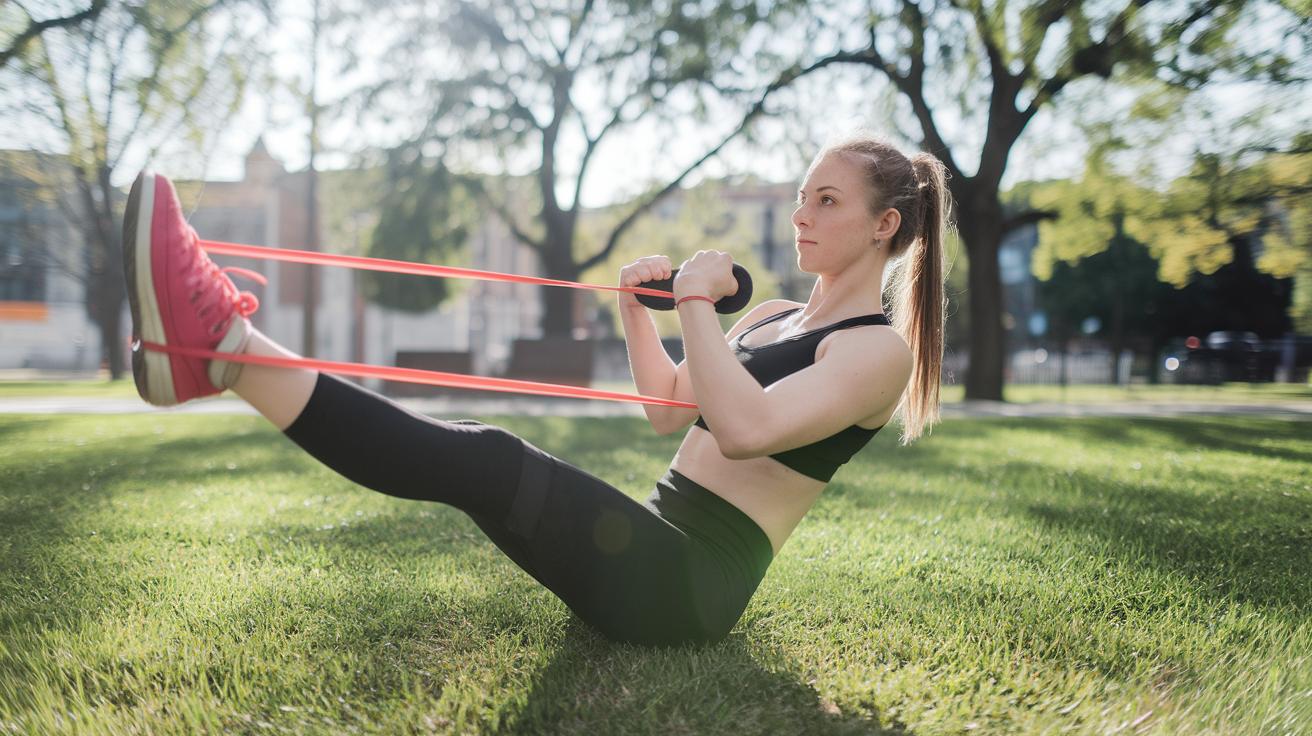
This section shares six effective exercises you can do with resistance bands to build both strength and stability. We’ve separated the moves into two groups. For your upper body, you'll try the Pallof Press for core and shoulder strength, the Copenhagen Plank Mini Band to work your inner thighs, and a gentle Rotator Cuff Shoulder Warm-Up to get your joints ready. For your lower body, you’ll perform the Half-Iso Kneeling Straight-Arm Pulldown to fire up your glutes, Chaos Band L-Sit Chin-ups to work on pull strength and core control, and the Ground-Pound Alternating Press to boost your leg drive.
Upper-Body Band Moves
Let’s start with the upper-body moves. First up is the Pallof Press. Stand sideways to where your band is pegged down, then press it out from your body. This helps keep your core tight while your shoulders work hard to keep you steady. Go slow and steady so you can really feel your muscles doing the work, avoiding any jerky moves that might lessen the benefits.
Next is the Copenhagen Plank Mini Band. Get into a plank position and loop the band around your thighs. This simple setup puts extra tension on your inner thighs while your core holds the position firm. Follow this with a gentle Rotator Cuff Shoulder Warm-Up. Slowly raise and lower your arms against the band’s light resistance. This move warms up your shoulders and helps reduce the risk of injury before you dive into heavier exercises.
Lower-Body Band Moves
Now for the lower-body moves. Begin with the Half-Iso Kneeling Straight-Arm Pulldown. Place the band above you, get into a kneeling position, and pull the band down. As you do this, make sure you squeeze your glutes and keep your back straight so you don’t lean forward too much.
Then, mix in the Chaos Band L-Sit Chin-ups with the Ground-Pound Alternating Press. The chin-ups will challenge your pulling strength while strengthening your core, and the alternating press helps you focus on a powerful leg drive with a nice, controlled stretch. Feel free to adjust the band’s resistance to match your comfort level and keep the workout safe yet challenging.
Safety Tips and Best Practices for Resistance Band Strength Training
Start with lighter resistance and slow, controlled reps to keep your joints safe and build your confidence with every move. Don’t push your band to stretch more than twice its normal length; this helps avoid wear and injury. Warm up with gentle rotator cuff exercises using your band to get your muscles and joints ready. These simple tips come from trusted techniques often used in nursing-home rehab, making them perfect for beginners and seniors alike.
Stick to a simple routine, like doing two sets of 15 reps for each exercise twice a week. Keep a steady pace and focus on good form to really work your muscles and keep your body stable. Adding extra gear like handles and anchors can make your workouts even better; you can check out your options at https://healthlystats.com?p=.
Safety in resistance band training is all about taking your time and knowing your limits. By controlling your movements and not rushing through your sets, you lower your risk of injury and get better results. This careful approach lets you gradually increase resistance, helping each session boost your strength and overall fitness.
Final Words
In the action, this article showed how resistance bands for strength training promote muscle gains with constant tension, smart workout routines, and controlled movements. It walked through the benefits, mechanics, and safety tips that make these bands a handy tool for boosting overall strength.
By exploring various exercises and safety practices, the piece invites you to add these flexible tools to your daily routine. Enjoy the positive impact this smart method can have on your health and feel inspired to keep moving forward.
FAQ
Q: What is a resistance bands workout?
A: A resistance bands workout uses flexible bands to provide tension through each exercise, engaging both push and pull movements for consistent muscle work and improved strength.
Q: What are the best resistance bands for strength training and where can I find reviews?
A: The best resistance bands for strength training offer a range of tensions and durability. Reviews, including those on Amazon, help compare features and pricing to guide your purchase.
Q: Are there exercises with resistance bands that suit beginners and include stretching routines?
A: Resistance band exercises suit beginners by offering easy-to-follow movements that strengthen muscles and include gentle stretching routines for improved flexibility.
Q: What options are recommended for seniors using resistance bands?
A: Resistance bands for seniors come in lower resistance levels and durable designs, making them a safe and effective option for gradual strength improvement.
Q: Can you build muscle with just resistance bands?
A: Resistance bands build muscle by creating constant tension during exercises, stimulating both the concentric and eccentric phases of muscle work to boost strength gains.
Q: What are the disadvantages of using resistance bands?
A: Some disadvantages of resistance bands include limited maximum resistance compared to free weights and occasional inconsistencies in tension if not used properly.
Q: What strength resistance band should I choose?
A: The right band depends on your fitness level and goals; lighter bands suit beginners for controlled work, while medium or heavy bands support higher resistance training for advanced users.

