
Ever thought you needed a gym to build muscle? What if you could reshape your body using just your own strength? Home workouts show that you can increase your muscle power with simple moves like push-ups and squats.
A clear routine and gradually tougher challenges help your muscles grow stronger and leaner, all without leaving your home.
So next time you wonder how to get fit, remember that bodyweight exercises are a practical and easy way to boost your strength without any fancy equipment.
Core Principles for Gaining Muscle at Home
Working out at home doesn’t mean you need any fancy equipment. Instead, you use your own body weight to boost strength, balance, and flexibility. Simple moves like push-ups, squats, and lunges make the most of your natural resistance. Imagine doing a set of squats where each rep challenges your legs and core while you work to keep your balance.
When planning your routine, think about how often and how long you want to train. If you’re just starting out, one or two days a week is plenty. As you build up your strength, you can move to two or three days, and eventually four days if you feel up to it. A session should typically last between 30 and 60 minutes. Start each workout with a 5- to 10-minute warm-up to get your muscles ready. For example, a beginner might stick with a 30-minute routine focused on proper form before gradually increasing the workout time.
To build muscle effectively at home, keep challenging yourself. Do each exercise in 2 to 6 sets of 6 to 12 reps, moving in a slow and controlled way. You can increase the difficulty by adding extra reps, changing the speed, or trying a tougher variation of an exercise. Think of it like putting together a puzzle, each little change forces your muscles to work harder and adapt, helping you make steady progress.
Effective Bodyweight Exercises for Muscle Building at Home

Compound moves work lots of muscles at once, which is great for building balanced strength. When you do these exercises, you use several joints at the same time. This saves you time and helps your body work better overall. For example, when you do push-ups, you're working your chest, shoulders, and core all in one go. Plus, these exercises feel a lot like everyday tasks, such as carrying groceries or picking up something heavy.
| Exercise | Primary Muscles | Sets | Reps |
|---|---|---|---|
| Push-ups | Chest, triceps, shoulders, core | 3–6 | 6–12 |
| Pull-ups | Lats, biceps, upper back | 3 | 2–5 |
| Squats | Quads, glutes, hamstrings | 3–5 | 8–12 |
| Lunges | Leg strength and balance | 3 | 15 per side |
| Dips | Triceps and chest | 2 | 10–12 |
| Planks | Core stabilization | 3 | 30–60 sec hold |
As you get stronger, try changing the intensity of these exercises. For example, if a regular push-up feels too hard at first, you can do it on your knees. And once a move becomes too easy, mix it up, like putting your feet up during push-ups or pausing at the bottom of a squat. This way, your muscles stay challenged. Always listen to your body and adjust the work to keep your form safe and effective. Remember, every small step helps you get closer to your muscle-building goals.
Designing an At-Home Workout Schedule for Muscle Gain
If you're just starting out with building muscle at home, try keeping it simple. Aim for two to three sessions each week that work your entire body. Give yourself about 48 hours between workouts so your muscles have plenty of time to rest and get stronger. This low-key approach lets you focus on doing each move right and slowly boosting your workout without feeling swamped.
Once you get comfortable, you can aim for three to four sessions a week if you're at an intermediate level. And if you’re more experienced, you might even try four to five sessions. At that point, you can break up your workouts to focus on different muscle groups instead of hitting the whole body every time. The idea is to tweak your schedule based on how you’re feeling and how your progress is going so you can avoid burnout and injuries.
A good workout starts with a quick warm-up on the move. Spend about five to ten minutes doing activities that get your blood pumping. Then, jump into the main part of your workout based on your plan, maybe alternating days between upper body, lower body, and a full-body routine using a push, pull, or legs split. Wrap up with a cool-down where you stretch for another five to ten minutes. This helps ease muscle tightness and jumpstarts your recovery. This simple plan makes it easier to see your progress and stick with your muscle-building journey at home.
Nutrition and Recovery for Effective Home Muscle Growth
Try to eat about 1.6 to 2.2 grams of protein per kilogram of your body weight each day. Protein helps repair your muscles and fuels growth, which is what you need after your home workouts. So if you weigh 70 kg, aim for roughly 112 to 154 grams of protein daily to help your muscles bounce back and get stronger.
To build lean muscle, add an extra 250 to 500 calories to your daily diet. This extra energy helps your body fix and grow your muscles after a workout. But don’t just eat anything, choose nourishing foods. Think of your meal as a balanced plate filled with lean proteins, whole grains, and lots of colorful vegetables. Keeping a short food journal can help you check that you’re eating enough to meet your goals. Little tweaks can bring big rewards in muscle tone and overall strength.
Make sure you get 7 to 9 hours of sleep each night. Good sleep works wonders on muscle repair and helps boost your progress. Also, drink about 3 liters of water every day to keep your body working well. Add a little active recovery into your routine, try foam rolling or stretching after a tough workout. A quick foam roll session in the evening can help loosen tight muscles and prepare you for another great day of exercise.
Equipment Choices and No-Gym Alternatives to Boost Home Gains
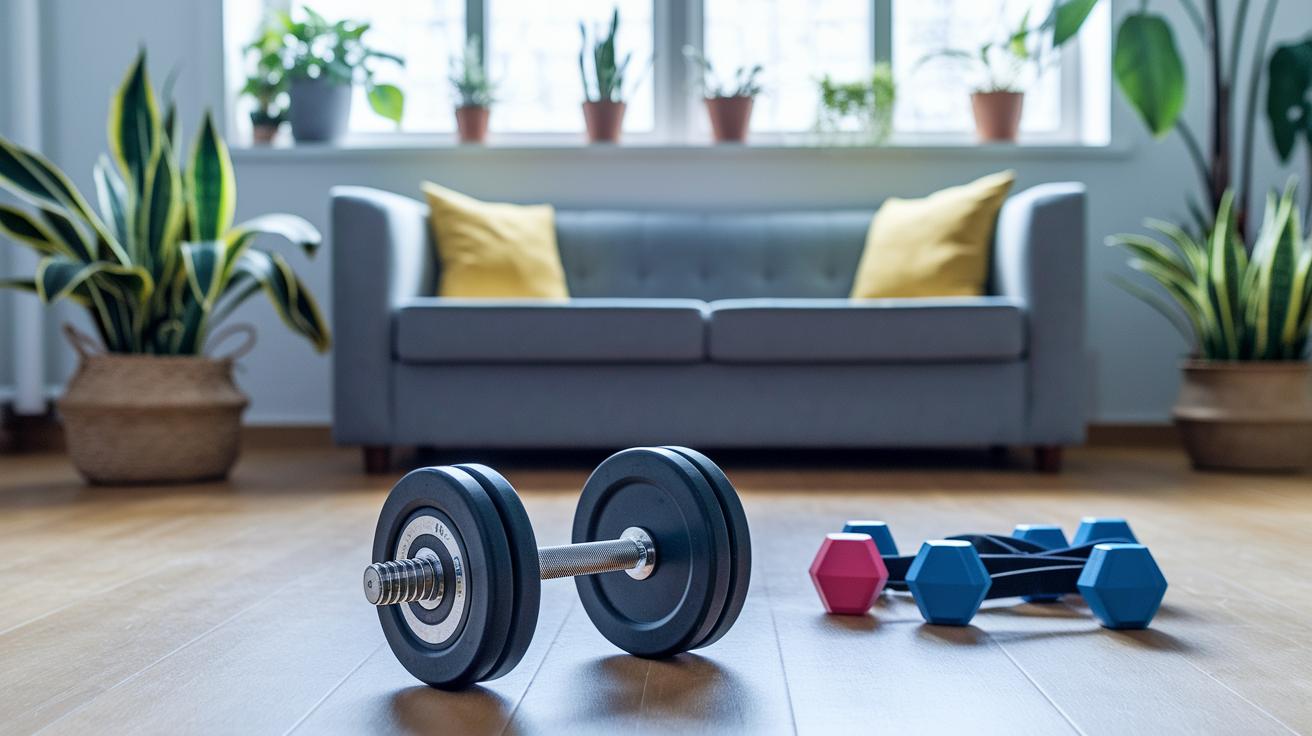
When you set up your at-home workout routine, a few smart choices can turn your living room into your personal gym. Resistance bands, for example, give you flexible tension for moves like rows, presses, and squats. They’re a favorite because they work well for different exercises without needing heavy equipment. And if you want to spice up your upper-body workouts, try using dumbbells for chest presses and flyes. These simple tools help you build strength gradually with sets of 3–6 and reps between 4 and 8.
You don’t need expensive gear to get a good workout. Everyday items can be great weight substitutes. Ever thought about filling a backpack with books for extra resistance during squats and lunges? Or using a sturdy chair or bench for dips and step-ups? Suspension trainers, like the TRX, also let you adjust the difficulty easily. By changing the angle of your body, you can start simple and gradually challenge your core and stability more as you improve.
Experimenting with these alternatives makes it easy to mix up your routine at home and keep pushing your progress, even without a full gym around.
Advanced Strategies for Accelerated Muscle Growth at Home

If you're ready to boost your workout routine at home, try out some cool techniques that push your muscles to work harder. These methods change the pace, adjust the movement, and add a twist to keep things fresh while still using proper form. It’s like giving your body a little extra challenge every time you exercise.
Here are five simple techniques you can mix into your workouts:
- Tempo control: Lower your weight slowly for about 3 seconds and then lift it quickly in 1 second. This builds more tension in your muscles.
- One-sided moves: Practice exercises like pistol squats or single-arm push-ups so each side of your body gets equal strength training.
- Paused reps: Take a short 2-3 second break in the middle of each rep. This extra pause ups the tension on your muscles.
- Drop-set holds: Do a full rep and then keep going with shorter, partial reps right after. This helps hit more muscle fibers.
- Explosive combos: Blend jump squats with burpees to add some power and boost your overall athletic ability.
Try rotating these techniques in your weekly plan, maybe focus on one method per session. This way, you're less likely to hit a workout plateau, and your muscles stay challenged and engaged.
Sample 30-Day Home Muscle-Building Workout Plan
For the first two weeks, get ready by doing three full-body workouts each week. Start each session with a quick 5-minute warm-up and finish with a 5-minute cool-down. You’ll work with exercises like push-ups, band rows, squats, lunges, and planks. These moves help your muscles get used to resistance training without any gym equipment. Keeping a steady, moderate pace and focusing on proper form will build your strength safely.
In Week 3, switch to an upper/lower split that targets different muscle groups on different days. Try increasing the load or the number of repetitions by about 10% to test your growing strength. Then in Week 4, add some fresh techniques like slowing down the lowering phase for about 3 seconds and lifting in 1 second, or pausing for 2 to 3 seconds in the middle of each rep. This week also includes a plyometric session for a burst of explosive power. These changes help fine-tune your form while gently pushing your limits.
Throughout the 30-day plan, listen to your body and adjust the intensity as needed. If you feel extra tired or sore, consider taking another rest day or cutting back a few repetitions. Keeping a simple training log by noting your reps or any exercise tweaks can show you helpful trends and let you adjust your schedule. With steady progress and smart rest, you’ll build strength and muscle in a balanced, manageable way.
Final Words
In the action, we explored simple home strength routines that combine bodyweight moves, progressive overload, and flexible training schedules. We also touched on smart nutrition and recovery habits that keep you moving forward.
We broke down equipment choices, intensity mods, and sample workouts that make the plan easy to follow. Each tip is designed to boost your confidence and keep daily routines fun.
By using these insights on how to gain muscle from home, you'll feel great and ready to tackle new challenges every day.
FAQ
How can I gain muscle from home for beginners and females, as discussed on Reddit?
Gaining muscle at home means sticking to simple, regular workouts that build strength gradually. Many find routines with bodyweight exercises and a good diet work well for beginners and females.
How can I gain muscle fast at home, especially for skinny guys?
Gaining muscle fast requires focused routines with compound moves, proper rest, and a calorie surplus. Skinny individuals can benefit from increasing weights or intensity as they progress.
How can I build muscle at home without equipment?
Building muscle without equipment is possible through bodyweight moves like push-ups, squats, lunges, and planks. Varying these exercises can help increase resistance and overall strength.
What are seven effective exercises to build muscle at home?
Seven effective moves include push-ups, pull-ups, squats, lunges, dips, planks, and burpees. Each exercise targets different muscle groups and helps build overall strength and stability.
Is it possible to build muscle at home instead of going to a gym?
Building muscle at home is achievable with structured workouts that include bodyweight exercises and minimal equipment. Consistency and proper nutrition can make home routines as effective as gym workouts.
What does the 3-3-3 rule in the gym involve?
The 3-3-3 rule refers to performing three sets of exercises with three key variations or intervals, helping maintain workout density and challenge the muscles effectively during sessions.
What is the 6-12-25 rule in muscle training?
The 6-12-25 rule means doing 6–12 reps per set followed by a drop set with 25 partial reps. This approach increases time under tension to further stimulate muscle growth.
How do bodyweight exercises like calisthenics, lunges, planks, burpees, and squats contribute to muscle building?
These exercises use your own bodyweight to create resistance, targeting various muscle groups. They help improve strength, balance, and flexibility when performed correctly and with increased difficulty over time.

