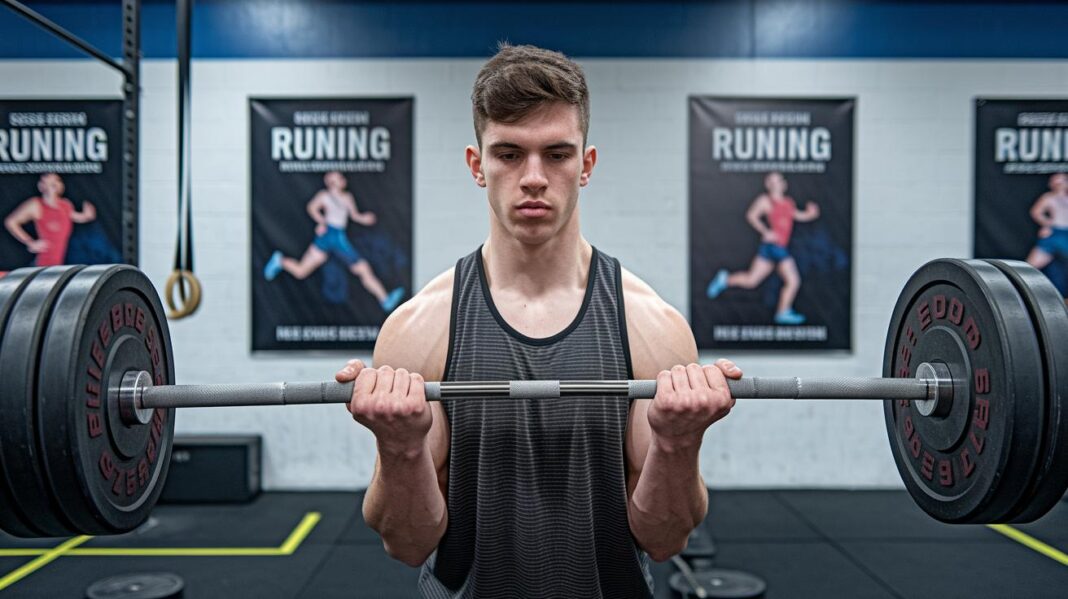
Have you ever wondered if adding weights to your running routine could give you an extra boost? Strength training isn’t just for gym regulars, it can actually help your muscles perform better when you run. Think of your body like a reliable car that needs a little fine-tuning; a few smart workouts might help you run longer and with more power.
In this post, we share a simple routine designed to boost your endurance, improve your running performance, and lower your risk of injury. Ready to give your runs a helpful kick-start? Keep reading to learn how mixing strength training with your runs can make a real difference.
Strength Training Routines to Boost Running Performance
When you lift weights, your muscles get tiny tears that work like a repair crew. As your body fixes these little breaks, your muscles grow stronger, bigger, and more enduring. Think of it like your muscles getting a tune-up so each step you take becomes more powerful.
A good plan is to do weight training twice a week on days when your runs are easier or at least two days before a tough run. For instance, you might do a light strength session on Tuesday and then a hard run on Thursday. This way, your muscles have time to heal and come back stronger, helping you run more efficiently while cutting down on injury risks.
Adding a mix of running and lifting can really pay off. As your muscles adapt, the extra strength helps you take longer, more effective strides while keeping your joints safe. Here’s what you can look forward to:
| Benefit | Explanation |
|---|---|
| Faster Running | Better metabolic use helps you pick up the pace |
| More Endurance | Your muscles keep going longer without tiring out |
| Fewer Injuries | Stronger muscles and joints mean less chance of getting hurt |
Remember, combining running and strength training isn’t about bulking up, it’s about working smarter. A solid weight training routine helps your muscles recover and improve, so you can tackle longer runs with confidence.
Try setting up a weekly plan with manageable weights and gradually increasing the load as you grow stronger. In no time, you’ll notice that extra power boosting both your performance and your overall confidence.
Lower-Body Strength Training for Runners

If you’re a runner looking to boost your stride power and protect your joints, adding squats, lunges, and deadlifts to your routine can really help. When doing squats, keep your chest lifted and make sure your knees stay aligned with your toes. Start with 3 sets of 10 reps, and as you get comfortable, gradually add a bit more weight. A handy tip: imagine sitting back into an old armchair, it can really help you nail the right form.
Split squats are another great move because they work each leg on its own, which improves your balance and stability. Begin with 3 sets of 8 reps per leg using just your body weight. Once you feel steadier, try holding some dumbbells. This not only builds strength, but it also helps even out any muscle imbalances that might be slowing you down.
Hip thrusts are perfect for focusing on your glutes, a key muscle for strong, powerful strides. Start with 3 sets of 10 reps and really feel your glutes contract at the top of each movement. When you’re ready for more challenge, add a weight plate or barbell to increase the resistance.
Lastly, single-leg deadlifts target your hamstrings and help improve your running economy. Aim for 3 sets of 8 reps per leg, and keep your back flat throughout the exercise. If you need extra support, use a stable surface to help with your balance. Each of these exercises works together to help you run longer and more efficiently while reducing the risk of injuries.
Core Strength Workouts for Runners
A strong core helps you run better by keeping your body steady and reducing tiredness while you run. It works like a bridge, moving energy from your torso to your legs so your stride stays smooth and efficient.
- Plank: Hold a forearm plank for 3 sets of 30 seconds. When you feel ready, try side planks or hold the plank for a longer time.
- Dead Bugs: Do 3 sets of 10 reps on each side. Keep your lower back pressed to the floor as you slowly lift the opposite arm and leg.
- Pallof Presses: Complete 3 sets of 12 reps per side. Stand so that you’re side-on to a resistance band anchored at chest height. Press the band straight out and then slowly bring it back while keeping your core tight.
- Russian Twists: Aim for 3 sets of 15 twists on each side. Start using just your body weight and add a light weight later as your core gets stronger.
These exercises improve your posture and help your energy flow steadily while running. Focus on good form and gradual progress, and you’ll notice your runs becoming easier and more enjoyable.
Upper-Body Strength Training for Runners

When you're running, your arms and shoulders help keep everything balanced and your stride strong. Rows pull those shoulder blades together for a better posture, while push-ups build up your chest and triceps so you can keep your energy up. Overhead presses also work your shoulders, helping them support your smooth arm swing.
Try doing 3 sets of 10 to 12 reps for both rows and push-ups. For overhead presses, 3 sets of 8 to 10 reps work great. Keep your movements steady, like when you lower yourself slowly during a push-up and then press back up. Imagine you're keeping a calm, even rhythm.
Good form is really important. Keep your core tight and move deliberately so you make the most of each move. This kind of upper-body work not only helps you breathe better when you run, but it also improves your arm drive and balance. Give these exercises a try during your workouts, and see how they lift your running performance.
Sample 2-Day Strength Plan for Runners
Day 1 starts with a mix of a steady run and some leg and core exercises. Begin with a 5-minute warm-up that gets you moving, try leg swings and high knees to lift your heart rate. Then go for a 20-minute run at a pace where you can still chat easily. After your run, work on building leg strength and stability:
- Squats: Do 3 sets of 10 reps. Keep your back straight and push up with your heels. Take a 60-second break between sets.
- Split Squats: Do 3 sets of 8 reps for each leg. Lower yourself slowly like you’re carefully stepping down a staircase. Rest for 60 seconds between sets.
- Single-Leg Deadlifts: Do 3 sets of 8 reps for each leg. This helps with your balance while strengthening your hamstrings. Keep a slight bend in your knee and move slowly. Rest for 60 seconds between sets.
Next, focus on your core:
- Plank: Hold for 3 rounds of 30 seconds. Keep your body straight and tighten your midsection.
- Russian Twists: Do 3 sets of 15 twists on each side. Start using just your body weight, and if you feel good, try a light weight. Take a 45-second break between sets.
Day 2 starts with a short run to warm up, followed by upper-body and full-body exercises. Begin with a 5-minute warm-up that includes arm swings and a light jog. Then, go for a 15-minute easy run.
After a quick cool-down, work on your upper-body strength:
- Push-Ups: Do 3 sets of 12 reps. Keep a steady pace and a strong core.
- Bodyweight Rows: Do 3 sets of 12 reps, using a sturdy surface if needed. Focus on squeezing your shoulder blades together.
- Overhead Press Alternatives: If you don’t have equipment, use water bottles for 3 sets of 10 reps.
Finish with a full-body circuit. Do 3 rounds of 10 burpees, resting for 60 seconds between each round. This plan fits nicely into a balanced week of 3 running days, 2 strength days, and 2 active recovery days. It’s a great way to boost your power and keep your runs smooth.
Designing a 12-Week Strength Program for Distance Runners

Begin with a simple plan. In Weeks 1–4, your goal is to build a strong base. During this part, keep the weights light and focus on doing bodyweight exercises, like squats, lunges, and planks, with the right form. Think of it as laying a solid foundation for your muscles to grow, much like setting bricks for a building. Try having 2 strength sessions each week and gently move from doing 2 sets of 10 reps to 3 sets as your body gets used to the work.
Then, in Weeks 5–8, move into a phase where you push your muscles a bit more. Now's the time to add moderate weights and increase the number of reps. This kind of challenge helps your muscles work better together with your running. For example, add dumbbell exercises for lunges and step-ups. Picture it like slowly adding little weights to your grocery bag until carrying a full load feels natural. Keep hitting 2 sessions per week. If it starts to feel easy, bump up the weight or the number of sets, maybe to 3 sets of 12 reps. Listen to your body; if a workout seems too simple, try increasing the weight just a little.
Finally, in Weeks 9–12, shift the focus to exercises that boost your running. In this phase, mix in dynamic moves and plyometrics, think squat jumps and single-leg hops, to mimic the motion of running. Continue to add a bit more weight when you can, or toss in an extra set if you need more challenge. It’s a good idea to keep a simple log so you can track how your lift weights, speed, and recovery improve week by week. Here’s a quick look at the plan:
| Phase | Focus |
|---|---|
| Weeks 1–4 | Build the base with light loads and perfect form. |
| Weeks 5–8 | Add moderate weights, more reps, and some dumbbells. |
| Weeks 9–12 | Increase weight, use dynamic exercises, and align workouts with running. |
Each part of the program builds on the one before, helping you strengthen your muscles and improve your coordination. This approach works to boost your endurance and overall running performance. Enjoy the journey and watch your strength grow along with your pace!
Injury Prevention Drills in Your Strength Routine for Runners
Running is fun, but it can put a lot of strain on your body. These simple exercises will help ease tight calves, back pain, shin splints, and foot pain. Calf raises, for example, work to make your ankles stronger and steadier. Try doing 3 sets of 15 reps, and remember to lift and lower slowly.
Glute bridges are another great move. They target your glutes and lower back by pressing through your heels. Aim for 3 sets of 12 reps to help keep your pelvis stable and reduce stress on your lower back while you run.
Balance lunges can boost the stability of your legs and also work your core. Do 3 sets of 10 reps on each leg. And for hip hinges, bend from your hips with a flat back. Complete 3 sets of 12 reps to protect your joints from the repeated impact of running.
Before you start, warm up with some dynamic stretching. Imagine casually swinging your arms and legs to get your blood flowing. After your strength session, try foam rolling for 1 to 2 minutes on each major muscle group like your calves, hamstrings, and quads. This cool-down routine helps ease muscle tightness and speed up your recovery.
These easy exercises can lower your risk of injury and boost your overall performance. If anything feels off, feel free to adjust the reps or slow down your movements. Sometimes, small changes can make a big difference.
At-Home Resistance Routine for Runners

Get started by warming up. Spend a few minutes marching in place or light jogging to get your blood pumping. This simple start sets you up for a good workout.
Try this circuit that works your whole body with little equipment. Do each exercise for the suggested number of reps or seconds, and then take a 60-second break after finishing one round. Begin with two rounds and add more as you build strength.
• Bodyweight Squats: Complete three sets of 12 reps. Focus on keeping your back straight and your knees behind your toes.
• Push-Ups: Do three sets of 10 reps. If needed, you can modify by keeping your knees on the ground.
• Single-Leg Deadlifts: Perform three sets of 8 reps on each leg. This exercise helps with balance and strengthens your hamstrings.
• Plank Variations: Hold a plank for 30 seconds, repeating for three rounds. Try switching between forearm and side planks for variety.
• Resistance-Band Rows: Try three sets of 12 reps. As you progress, you can use bands or lightweight dumbbells to increase the challenge.
If you’re just starting out, stick to bodyweight and core moves until you feel comfortable. Then, as your strength grows, add more compound moves and try using simple gear like dumbbells or bands for a bigger challenge.
Tracking & Optimizing Your Runner Strength Routine
Using a training log can really help you see your progress clearly. Write down every detail, like how many sets and reps you complete, the weights you use, and even how hard each exercise feels. You can rate your effort on a scale from 1 to 10 and add any extra notes about feeling tired or energized. This simple routine shows you when an exercise feels easier, hinting that it's time to increase the weight.
Consider organizing your data in a table like this:
| Date | Exercise | Sets/Reps | Weight | Effort (1-10) |
|---|---|---|---|---|
| MM/DD | Squats | 3×10 | 50 lbs | 7 |
Take a moment each week to look over your log. When you notice that your weights and reps are feeling easier, gradually add more weight. Also, remember to give yourself ample rest between workouts so your muscles can recover. Balancing your efforts with proper rest means you can improve both your strength and your running speed.
Final Words
In the action, we broke down targeted exercises that boost endurance and prevent injury. We looked at lower-body moves that power your stride, core exercises to keep your form strong, and upper-body tips to keep your run steady. Each section offers clear guidance on sets, reps, and timing so you can sync these exercises with your runs. Keep experimenting with these tips, and enjoy the rewards of a balanced workout. Embrace your strength training routine for runners and feel the difference in every step.

