
Ever wonder if a simple jump rope can boost your heart? Just imagine: only ten minutes of fast-paced skipping can burn more calories than a light run.
Jump rope workouts do more than just burn calories. They get your heart pumping, improve your coordination, and help melt away calories quickly.
The trick is in mixing short bursts of high energy with brief rests. This pattern turns a few minutes into a full heart workout.
So if you want a fun and efficient way to energize your body, jump rope cardio might be exactly what you need.
Jump Rope Cardio Workouts to Maximize Heart Rate and Calorie Burn
Jump rope workouts pack a serious punch for your heart and help burn calories fast. These routines make your heart work hard, boost your overall health, and help you shed calories quicker than you might expect. For instance, a person weighing about 60 kg can burn more than 150 calories in just 10 minutes of high-intensity interval training (HIIT) skipping compared to around 120 calories when running. Try mixing 30 to 60 seconds of fast skipping with equal periods of active recovery. It’s amazing how, in just 10 minutes, you can push your heart into that fat-burning zone way faster than with steady-paced exercises.
You can choose between HIIT and low-intensity steady state (LISS) formats depending on your fitness level and the time you have. HIIT really cranks up the intensity with rapid, fat-melting bursts, while LISS keeps it slow and steady, which is great for building endurance over time. The best part? You can do jump rope sessions almost anywhere, at home in your living room, in a park, or even in your driveway.
Imagine switching between quick bursts of skipping and short recovery breaks. This mix not only keeps your heart pumping but also boosts your coordination and agility. Jump roping turns a simple piece of rope into a fun and effective way to get your body moving. So give it a try and see how this dynamic workout can turn your daily routine into a calorie-burning, heart-strengthening adventure.
Proper Technique and Setup for Jump Rope Cardio Sessions

Start by getting your rope and body in sync for a great workout. First, adjust your jump rope so the length matches your height. Hold the handles at your sides, and make sure the rope reaches up to your armpits. This simple step makes your jumps smoother and more efficient.
Keep your body upright with a slight bend in your knees and let your arms stay relaxed. Landing softly on the balls of your feet helps lower the impact and prevents injuries. It may take a bit of practice, but that extra attention really pays off.
Aim to keep your jumps low, only about 1 to 2 inches off the ground. Light, quick hops save energy and protect your joints. Also, focus on steady wrist movements to control your rope’s speed. With these basics in place, your jump rope sessions will be safer and more effective, setting you up for a fun, fat-burning cardio workout.
Jump Rope Workouts for Cardio: Supercharge Your Heart
Looking for a fun way to boost your heart health? Try switching up your jump rope game with bursts of high-intensity interval training (HIIT). This means you’ll jump as fast as you can for about 30–60 seconds, then give yourself the same time to rest or slow it down by marching or lightly skipping. It’s like having mini sprints that quickly get your heart working hard and burning calories.
If you’re new to jumping or prefer a gentler pace, low-intensity steady state (LISS) might be your best bet. Here, you keep a moderate speed for about 5–10 minutes, steadily building up your endurance. Think of it as finding a smooth rhythm where your heart still works but stays in a comfortable range.
For a bit of extra fun, try mixing in speed changes or even double-unders. Double-unders are when the rope swings under your feet twice with one jump, adding more challenge. A simple plan to try could be:
| Action | Duration |
|---|---|
| All-out skipping | 30 seconds |
| Active recovery (light jumping) | 30 seconds |
| Repeat | 10 rounds |
Whichever style you choose, setting your workout into these intervals helps not only with boosting calorie burn but also with improving your coordination and overall heart fitness. Play around with the timing and movements until you find the rhythm that really gets your heart excited about moving!
Time‐Based Jump Rope Cardio Routines for Every Schedule

Choose the routine that fits into your busy day and give your heart a fast, fun workout. Each session is designed for a specific time slot while still providing a serious cardio boost. If you only have a few minutes, try the 5-minute routine. It uses a heavy rope to quickly ramp up energy and fire up fat burning. It's just right for those moments when time is tight but you need a fast cardio kick.
If you can spare a little more time, the 10-minute session is a great choice. It adds simple agility drills with single unders, which are quick jumps that help you work on your coordination. The session has a light pace that builds endurance without tiring you out. It’s perfect if you want to sharpen your rhythm and footwork.
For a bit more of a challenge, try the 15-minute workout. This routine mixes alternating-foot hops with gentle side-swings to work different muscle groups. These lateral moves not only boost your balance but also keep your heart pounding steadily throughout the session.
If you're ready for an even longer workout, the 20-minute circuit might be just the thing. It pairs jump rope bursts with full-body exercises like Jumping Jacks, Speed Skaters, Lunges, and ends with a Plank hold. This powerful blend of cardio and strength work helps burn calories and builds muscle endurance all at once.
| Workout Duration | Key Features |
|---|---|
| 5 Minutes | Heavy rope for a quick energy boost |
| 10 Minutes | Agility drills with single unders |
| 15 Minutes | Alternating-foot hops and side-swings |
| 20 Minutes | Jump rope with full-body moves (Jumping Jacks, Speed Skaters, Lunges, Plank hold) |
Play around with these sessions to discover the pace that gets your heart racing and keeps your workout routine fresh.
How Jump Rope Compares to Running for Cardiovascular Fitness
Jump rope workouts are a fun and effective way to get your heart pumping and burn calories fast. When you skip rope, you can torch more calories in a minute than you usually do while running. For instance, a 10-minute high-intensity jump rope session can burn over 150 calories, making it a smart choice if you’re short on time and want to maximize your calorie burn.
Both jumping rope and running can boost your VO₂ max [this measures how well your body uses oxygen during exercise]. But jumping rope brings extra perks by improving your coordination and agility. The steady rhythm of skipping keeps you balancing and adjusting constantly. This not only works your legs but also engages your core and arms. In truth, this varied movement can give you a more rounded cardio workout than the repetitive pace of running.
When you mix in bursts of high intensity with skipping, your heart gets an extra workout. The dynamic nature of these routines gives you both aerobic exercise and functional fitness benefits. So, whether you’re in a rush or just looking to mix things up, jump rope sessions can boost your heart health in a lively and engaging way.
Choosing the Right Jump Rope and Gear for Home Cardio Workouts
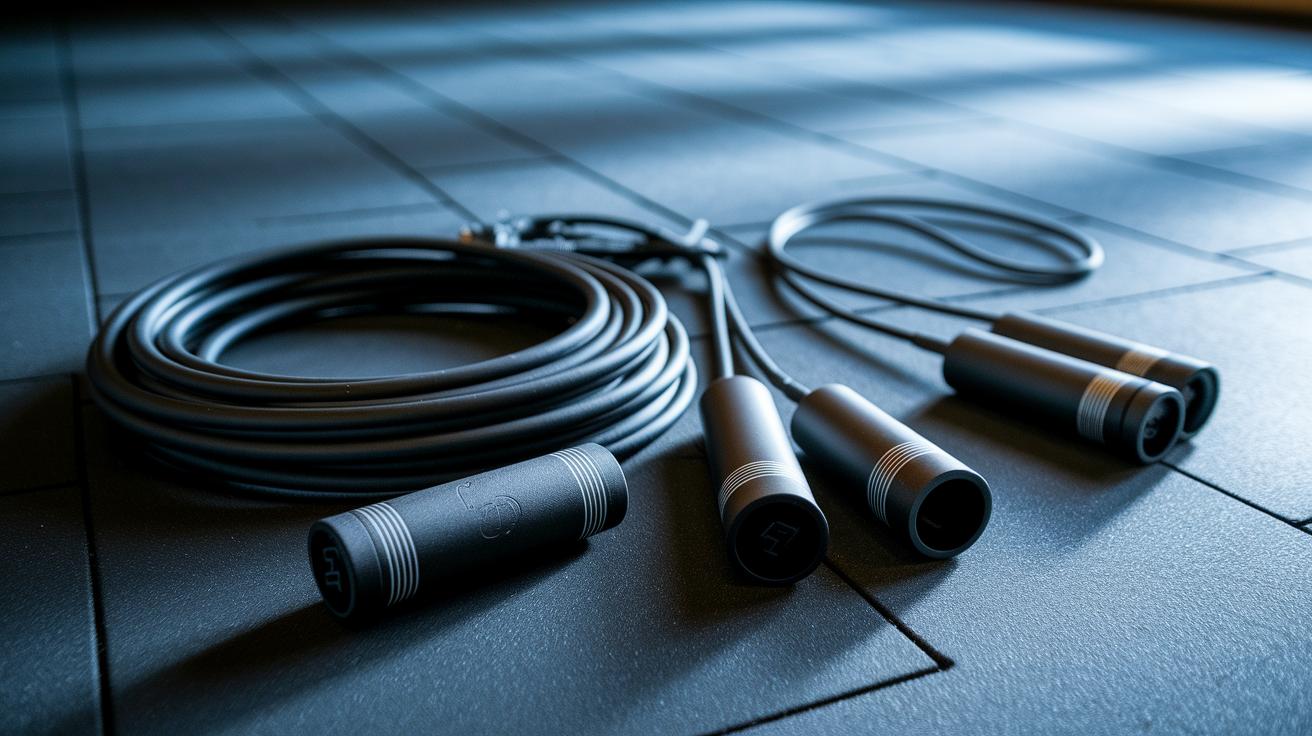
Choosing the best jump rope gear can really boost your workout at home. A rope with extra weight makes your muscles work harder and helps you burn more calories, each jump feels like a mini strength session. If you love cool tech, you might enjoy AMP Bluetooth ropes. They track your jump count and show real-time insights on your phone, giving you feedback as you sweat it out.
Space can be an issue sometimes. For small areas or if you're often on the move, a ropeless design might be the answer. It saves space and lets you focus on your rhythm without getting tangled up. These portable options mean you can jump indoors or even try them outside, whether it’s in your backyard, at the park, or on your driveway. Pick gear that fits your space and style, and make every jump a step toward a healthier heart.
Tracking Progress and Setting Goals for Jump Rope Cardio
Begin by tracking the number of jumps you do, how long you jump, and your heart-rate zones (the different ranges your heart moves through during exercise). This first record helps you see where you're starting from. For example, count your jumps during a three-minute session and use that number as your baseline.
Then, set small, reachable goals. You might add an extra 10 seconds to your session each week or aim for more jumps each time you skip. Keep an eye on the calories you burn to stay inspired, and tweak your routine as you get fitter. Writing these down or using a wearable tracker that gives real-time updates can be a big help.
Sticking with your routine and slowly increasing the challenge makes it easier to watch your progress and keeps your workouts fun and engaging.
Warm-Up and Cool-Down Practices for Jump Rope Cardio Workouts

Kick off your jump rope session by getting your muscles warmed up. Start with gentle moves like leg swings, butt kicks, and ankle circles to wake your body up. Even a light 2-minute skip can raise your core temperature and ease you into the workout. Think of it as setting a calm yet steady rhythm for the session.
Once you've finished jumping, take a moment to cool down and relax those muscles. Stretch your calves and hamstrings, roll your shoulders, and take some deep, slow breaths. This easy cool-down routine helps reduce soreness and speeds up recovery, so you’re ready for your next workout with renewed energy.
Adapting Jump Rope Cardio Workouts to Different Fitness Levels
When starting your jump rope session, pick a level that suits your ability right now. If you're new to jumping rope, stick with basic single-unders at a slow rate. Try jumping for 30 seconds and then resting for 30 seconds. This helps build coordination and lets you learn the basics safely.
Once you feel more confident, you can step up to intermediate routines. Mix in alternating-foot hops and a few short bursts of double-unders. For example, you might alternate quick hops every 30 seconds with a 10-second burst of double-unders. This routine boosts your agility while keeping your jumps steady.
For those who are more advanced, it's time to challenge yourself with more complex patterns like cross-overs and high-knee skips. Instead of short bursts, extend your jumping time to work on endurance and rhythm. Experiment with different combos, but always keep your form in check to avoid injuries. With practice, you’ll naturally build up your strength and skill, making your workouts even more rewarding.
Final Words
In the action, we explored jump rope workouts for cardio to boost heart health and calorie burn. We covered proper form, setting up your gear, and designing short, effective sessions that work for any schedule. The guide compared skipping against running and highlighted how to track progress, all while keeping the workouts fun and safe. This hands-on approach shows that even a simple tool like a jump rope can make every session count. Enjoy these routines and keep moving forward toward a healthier, more energetic life.
FAQ
How do jump rope workouts help beginners improve cardio?
The jump rope workouts for beginners offer a fun and effective way to boost heart health and build stamina. They use simple techniques that are great for anyone starting out, including women.
What are the cardio benefits of jumping rope?
The jumping rope exercise increases your heart rate, burns calories fast, and improves coordination. These benefits support overall heart health while keeping workouts engaging.
How can I perform jump rope workouts at home?
The jump rope workouts at home are easy to set up. You can follow short, structured routines that fit any schedule, making it simple to build your cardio fitness without leaving your space.
What does a jump rope HIIT workout for beginners involve?
The jump rope HIIT workout for beginners alternates fast-paced skipping with rest intervals. This method builds strength gradually and boosts cardiovascular fitness in a manageable, energizing way.
What is a 30-day jump rope workout plan?
The 30-day jump rope workout plan provides a structured schedule that gradually increases in intensity. It helps improve endurance and calorie burn, motivating you to stick with your cardio routine.
How long should I jump rope for cardio?
The ideal jump rope duration starts at 5 to 10 minutes to gain benefits. As you get fitter, you can extend your sessions to match your growing endurance and fitness goals.
Is jump rope a good way to improve cardio fitness?
The jump rope is a great tool for improving cardio fitness because it efficiently burns calories and strengthens your heart. It also adds coordination and agility benefits in a short amount of time.
What is 10 minutes of jumping rope equivalent to when compared to running?
Ten minutes of jumping rope, especially in a high-intensity format, burns more calories than steady-state running for many people, offering an efficient alternative for boosting your cardiovascular health.
Can jumping rope help with losing belly fat?
The jump rope can aid in losing belly fat by increasing your heart rate and calorie burn. When combined with a balanced diet and overall exercise, it supports fat reduction and better fitness results.

